Gen Z workers bring fresh perspectives, strong tech skills, and high expectations around purpose and inclusivity. To keep them engaged and show appreciation, it’s essential to understand not just what they do, but why they do it.
What sets Gen Z apart is a deep comfort with digital communication and rapid change. These factors shape how they approach work and growth. Values and career goals all play a role in what makes this generation tick.In this article, we’ll explore how HR can better support Gen Z workers by leveraging tech skills, continuous learning, work-life balance, and creating an environment where they feel valued and heard.
Key Takeaways
- Gen Z employees thrive when HR leverages their tech skills to streamline work, improve efficiency, and encourage innovation.
- Continuous feedback, mentorship, and clear career paths keep Gen Z engaged and motivated for long-term growth.
- Flexible schedules, remote options, and wellness programs support work-life balance and mental health for this generation.
- Giving autonomy, encouraging creativity, and allowing ownership of projects empower Gen Z employees and boost engagement.
- Recognition tools like Kudoboard enhance morale, foster meaningful connections, and make accomplishments visible and appreciated in real time.
Gen Z Workers and Their Workplace Expectations
Gen Z workers have grown up in a world of fast-moving technology and social change, which influences how they view work and what they expect from their jobs. To understand the Gen Z workers’ personality, it’s important to look at the values and behaviors that define them.
Gen Z workers tend to:
- Prioritize purpose-driven work, wanting to feel that their efforts truly matter and contribute to something meaningful beyond just earning a paycheck.
- Expect flexibility and work-life balance, preferring roles that allow them to manage their time, protect their mental health, and maintain healthy boundaries between work and personal life.
- Value diversity and inclusion in the workplace, seeking environments where everyone feels respected, heard, and supported, regardless of background or identity.
- Be highly skilled with technology and expect smooth digital experiences, relying on modern tools to stay productive, collaborate easily, and access information quickly.
Some managers find Gen Z workers most difficult to work with when rigid leadership styles clash with their need for flexibility, feedback, and open communication, making modern, adaptable HR strategies essential.
Technological Proficiency in Gen Z Employees
Gen Z is the first generation to grow up entirely in the digital age, making them naturally tech-savvy and highly adaptable to new technologies. They are comfortable navigating various digital tools, from collaboration platforms to AI-powered solutions, and often serve as informal tech support in the workplace.
1. They Adapt Quickly To New Tools And Processes:
Gen Z workers adapt quickly to new tools and processes, learning software fast and often helping others catch up. Their adaptability reduces errors and frustration, lowering the risk of performance issues.
2. They Improve Efficiency Through Tech Fluency:
Because they navigate multiple platforms effortlessly, Gen Z employees often complete tasks more quickly and find solutions to problems with greater ease. They know how to use digital tools to simplify tasks, organize workflows, and manage data more effectively.
3. They Expect Simple And Modern Digital Tools:
Having grown up with easy-to-use apps, Gen Z workers expect workplace technology to be just as smooth. Outdated systems and complicated software can quickly become frustrating for them. When companies invest in modern, user-friendly platforms, it helps boost engagement, reduce errors, and make daily tasks less stressful.
4. They Prefer Instant Access To Information And Learning Resources:
Gen Z workers are used to finding answers instantly, whether through search engines, video tutorials, or digital assistants. At work, they expect easy access to training materials, company policies, and support resources. Provide clear, well-organized digital knowledge hubs to help them stay productive.
The Need to Balance Technology with Human Interaction
While Gen Z’s digital skills are a huge asset, overreliance on technology can impact creativity, attention spans, and interpersonal skills. To create a more balanced work environment, companies should:
- Encourage Face-to-Face Communication: Promote in-person meetings, brainstorming sessions, and networking events to strengthen collaboration and relationship-building.
- Emphasize Soft Skills Development: Offer training on emotional intelligence, communication, and teamwork to enhance interpersonal skills.
- Promote a Hybrid Work Approach: While remote work is appealing, fostering in-office interactions can improve teamwork, company culture, and problem-solving dynamics.
- Support Digital Well-Being: Encourage digital detoxes, screen breaks, and healthy work-life boundaries to prevent burnout.
Leverage Gen Z’s tech proficiency while fostering human connections to create a more dynamic and well-rounded workforce that thrives in both digital and collaborative environments.
Need for Continuous Feedback and Development
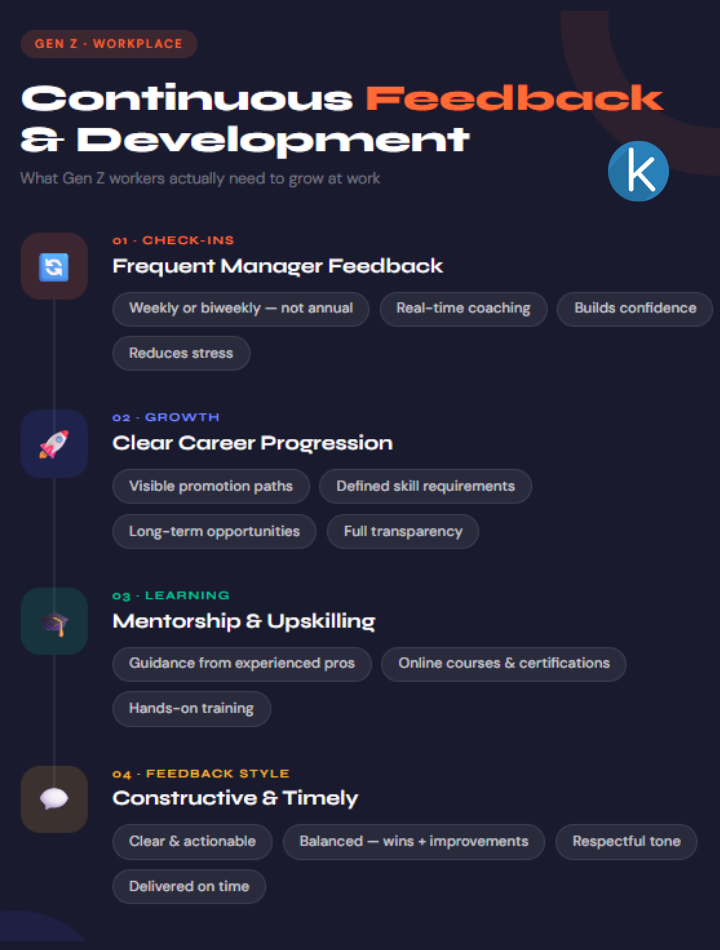
Gen Z is raised in a digital era where feedback is instant, social media, online learning, and gaming all shape this expectation. In the workplace, they seek real-time feedback over traditional annual performance reviews.
HR Strategies to Support Continuous Development
HR can support Gen Z’s appetite for growth with these practical strategies:
- Implement regular feedback cycles with frequent manager check-ins rather than relying solely on annual reviews.
- Develop clear career roadmaps so employees understand promotion opportunities and required skill development.
- Offer mentorship programs that pair Gen Z employees with experienced colleagues for professional guidance.
- Provide access to learning resources such as online courses, workshops, and leadership training.
- Encourage a culture of growth by normalizing continuous feedback, skill-building, and professional development discussions.
Prioritize real-time feedback and continuous learning to keep Gen Z employees committed to long-term career growth within the organization.
Emphasis on Work-Life Balance and Flexibility
Unlike previous generations that often accepted long work hours as part of career growth, Gen Z places a high value on overall life balance. They want roles that fit into their lifestyle, allowing them to stay productive without sacrificing their personal time.
1. Flexible Schedules and Remote Work Options
- Gen Z employees prefer flexible schedules and hybrid or remote work options that let them work when they feel most productive.
- They care more about results than strict office hours and expect employers to trust them to manage their time well.
- Companies that offer flexibility often find it easier to attract and retain Gen Z talent.
2. Prioritization of Mental Health and Well-Being
- Many Gen Z workers see mental health as just as important as physical health.
- They expect workplaces to actively support mental wellness through mental health days, stress management programs, and a culture that doesn’t glorify burnout.
3. Companies That Support Personal and Professional Balance
- Gen Z wants work to fit into their life, not the other way around.
- They look for organizations that respect boundaries, encourage vacations, and promote healthy work habits instead of overworking employees.
- When companies prioritize holistic well-being, they often see higher engagement, satisfaction, and productivity.
4. Wellness Programs and Mental Health Resources
- Access to wellness programs like gym memberships, mindfulness apps, or on-site wellness initiatives is highly valued.
- Employers are encouraged to include mental health resources in their benefits packages, such as therapy support, wellness workshops, or employee assistance programs (EAPs).
HR Strategies to Support Work-Life Balance
Supporting work-life balance helps Gen Z workers stay healthy and productive. Use the following strategies to keep them motivated:
- Implement flexible work policies (hybrid schedules, remote work options, and adaptable hours).
- Encourage mental health awareness by offering counseling services and stress-reduction programs.
- Promote a culture that respects personal time (e.g., discouraging after-hours emails, encouraging time off).
- Provide wellness incentives such as fitness benefits, meditation programs, and mental health days.
By prioritizing work-life balance, companies can foster a happier, healthier workforce and reduce turnover among Gen Z employees.
Independent and Entrepreneurial Drive
Gen Z is one of the most entrepreneurial-minded generations. Growing up in the gig economy and witnessing the success of startups and social media influencers, many Gen Z employees see traditional career paths as limiting. They crave ownership and opportunities to bring fresh ideas to the table.
- Preference for Autonomy and Self-Directed Work
- Gen Z values independence and doesn’t want to be micromanaged.
- They thrive in environments where they can take ownership of their tasks and projects.
- Employers should provide clear expectations but allow room for creativity and decision-making.
- Emphasis on Creativity and Innovation
- Gen Z is highly innovative and enjoys problem-solving in unique ways.
- They prefer workplaces that encourage brainstorming, experimentation, and the implementation of new ideas.
- Companies that foster a culture of continuous learning and innovation will keep Gen Z engaged.
- Desire for Leadership and Ownership of Projects
- Many Gen Z employees want leadership opportunities early in their careers.
- They don’t necessarily need a formal leadership title, but appreciate roles that allow them to take initiative and lead initiatives.
- Employers should create pathways for high-performing Gen Z employees to step into leadership roles or take on special projects.
- Appreciation for Workplaces That Support Entrepreneurial Thinking
- Gen Z is drawn to companies that value innovation and adaptability.
- Workplaces that encourage side projects, intrapreneurship (internal entrepreneurship), and cross-functional collaboration appeal to their entrepreneurial spirit.
- Employers who actively seek input from younger employees and provide opportunities for creative problem-solving will see increased engagement.
HR Strategies to Nurture Gen Z’s Entrepreneurial Spirit
Nurturing Gen Z’s entrepreneurial spirit empowers them to take initiative and drive business growth. You can:
- Encourage intrapreneurship by allowing employees pitch and lead their own projects.
- Offer professional development with a focus on leadership, innovation, and business skills.
- Give employees autonomy by focusing on outcomes rather than micromanaging processes.
- Create a feedback-driven culture where employees feel heard and empowered to contribute new ideas.
By recognizing and leveraging Gen Z’s entrepreneurial mindset, companies can cultivate a more dynamic, forward-thinking workforce that drives innovation and long-term growth.
Challenges in Social Skills and Professionalism
Gen Z grew up in a fully digital world, making them tech-savvy and adaptable. Their reliance on texting and social media can sometimes affect in-person social skills and professional etiquette.
Many prefer informal, text-based communication and may struggle with formal emails or clear verbal communication. Training in business communication, presentations, and active listening can help them gain confidence.
Face-to-face interactions can feel challenging. Mentorship, interpersonal skills workshops, and team-building exercises guide them in navigating workplace dynamics effectively.
HR’s Role in Bridging the Gap:
To address these challenges and ensure a well-rounded workforce, HR should:
- Offer professional communication training covering formal emails, public speaking, and client interactions.
- Provide mentorship programs to help Gen Z employees navigate workplace culture and etiquette.
- Create structured team-building activities that encourage collaboration and interpersonal skill development.
- Set clear expectations about professionalism, including appropriate workplace behavior, dress codes, and office norms.
Addressing these challenges can help Gen Z employees develop essential social and professional skills, leading to stronger workplace relationships and long-term career success.
Mental Health Awareness in the Workplace
Gen Z is more open and proactive about mental health than previous generations. They expect employers to acknowledge well-being and create supportive environments where stress, anxiety, and burnout can be discussed openly.
They also want easy access to resources like counseling, EAPs, mental health days, and wellness tools. Flexible schedules, manageable workloads, regular breaks, and wellness programs help reduce stress, boost productivity, and improve engagement and retention.
HR’s Role in Supporting Mental Health:
To create a mentally healthy workplace, HR teams should:
- Normalize mental health discussions through awareness campaigns and leadership advocacy.
- Provide easily accessible resources, such as confidential counseling services and wellness stipends.
- Encourage work-life balance by promoting reasonable workloads, flexible hours, and remote work options.
- Train managers to recognize signs of burnout and offer support to struggling employees.
By prioritizing mental health, companies not only improve employee satisfaction and retention but also foster a more engaged and productive workforce.
How Kudoboard Supports Gen Z Workers in the Workplace
Kudoboard is a digital appreciation and recognition platform designed to enhance employee engagement and retention. It offers various features that align with the expectations and preferences of Gen Z employees:
Encourages Meaningful Recognition: Kudoboard facilitates real-time, public acknowledgment of employee achievements, fostering a culture of appreciation. This approach resonates with Gen Z’s desire for frequent and transparent recognition.
Supports Mental Health and Well-being: By providing a platform for expressing gratitude and support among colleagues, Kudoboard contributes to a positive work environment, which is crucial for mental health and well-being.
Enhances Team Collaboration: Kudoboard enables interactive, team-oriented appreciation boards, strengthening workplace connections, especially in hybrid or remote settings. This fosters a sense of community and collaboration among employees.
Builds a Transparent Culture: Public acknowledgments on Kudoboard demonstrate company values in action, fostering a sense of authenticity and transparency that Gen Z employees seek. This openness can enhance trust and alignment with organizational goals. Another way to be authentic and transparent is by thoroughly building employee connections in meaningful ways.
Integrate Kudoboard into HR practices to effectively address key concerns of Gen Z employees, leading to increased engagement and retention.
Final Thoughts: Supporting the Modern Gen Z Worker
Adaptation to the needs of Gen Z workers is key for HR teams. So, be sure to leverage their tech-savvy nature, encourage inclusivity, offer regular feedback, support mental health, and embrace flexible work to create a workplace where Gen Z employees feel valued and empowered.Incorporating thoughtful gifting and recognition through platforms like Kudoboard adds a personal touch that resonates with Gen Z, strengthens connections, and reinforces a culture of appreciation.
Keep Gen Z employees engaged with meaningful recognition. See how Kudoboard helps HR teams celebrate wins, strengthen culture, and boost retention.
Frequently Asked Questions
1. What percentage of the workforce is Gen Z in 2026?
Gen Z makes up approximately 30% of the global workforce in 2026, with projections showing continued growth as more enter full-time roles.
2. How does Gen Z differ from Millennials in workplace priorities?
Gen Z prioritizes rapid career progression, purpose, and mental health over traditional leadership climbs more than Millennials, who focus more on work-life balance and collaboration; Gen Z shows higher job mobility for growth.
3. What challenges do managers face with Gen Z employees?
Managers often struggle with Gen Z’s preference for frequent feedback, flexibility, and quick progression; many report difficulties in motivation, communication, and adapting to their values-driven, tech-native approach.
4. Why do Gen Z employees change jobs frequently?
Gen Z changes jobs often due to a lack of career progression, purpose misalignment, low salary, or poor work-life balance; about one-third plan to leave within a year if growth opportunities are unmet.
5. What role does purpose play for Gen Z at work?
Purpose is essential for Gen Z, as it drives job satisfaction and well-being. They prioritize employers with strong ethical values, societal impact, and meaningful work over just pay or titles.
6. What skills development do Gen Z employees seek?
Gen Z seeks continuous learning. Soft skills, like empathy and leadership, and tech training (especially for AI) rank in the top reasons they choose or stay with employers.
About the author: