
Today, we recognize employees for almost everything, small improvements to everyday effort.
Back then, it was rare and hard-earned. But now, as workplaces have evolved, rewards and recognition platforms have made appreciation easier to share in the moment, more frequent, more visible, and more personal.
(Studies note: 87% of employees say meaningful recognition directly impacts their job satisfaction.)
What was once occasional is now essential. So, let’s take a deeper look at how employee recognition evolved and what truly works today.
Key Takeaways
- Recognition isn’t an annual event anymore; it’s part of everyday work. What used to be plaques and anniversaries is now about noticing effort, progress, and small wins in real time.
- The most meaningful recognition now comes from peers, not just managers. Coworkers see the day-to-day contributions that matter most, making appreciation feel more genuine and inclusive.
- Digital tools help ensure no one’s effort goes unnoticed. Modern recognition platforms make it easier to recognize consistently, fairly, and at the right moment.
- In 2026, recognition works best when it feels personal and value-driven. Employees care less about flashy rewards and more about appreciation that reflects who they are and what the company stands for.
What Is Employee Recognition?
Employee recognition is the practice of acknowledging and appreciating employees for their effort, achievements, and contributions that align with company goals.
It focuses on expressing gratitude, whether for everyday effort, progress, or major milestones, and helps employees feel seen and valued.
It takes many forms: daily shout-outs, peer-to-peer appreciation, milestone celebrations, and formal recognition programs.
Employee Recognition vs Employee Rewards
Employee recognition is often confused with rewards, but the two are different.
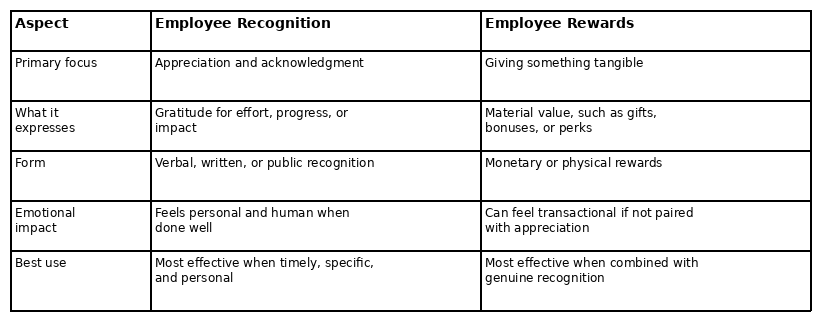
The most effective programs combine both, pairing appreciation with thoughtful rewards using modern employee rewards software and scalable rewards and recognition platforms.
Benefits of Employee Recognition
When done consistently, the benefits of employee recognition extend beyond morale.
- Improves loyalty and retention: Recognized employees are more likely to stay and advocate for their workplace.
- Increases engagement: Regular recognition motivates employees to stay involved and perform better.
- Boosts morale: Feeling appreciated positively impacts confidence and happiness at work.
- Enhances the employee experience: Ongoing recognition creates a more positive, supportive workplace culture.
A Timeline of Employee Recognition Evolution
Let’s take a quick look at how employee recognition has changed over the years and what that means for today’s workplaces.
TL;DR: The Evolution at a Glance
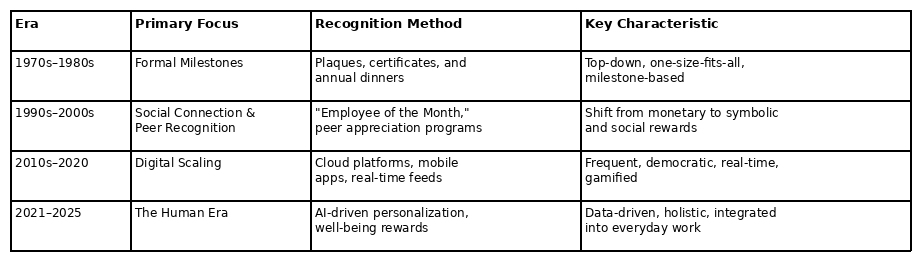
1970s–1980s: Formal Recognition Rooted in Loyalty
Recognition was largely ceremonial, focusing on landmark career achievements (think 25 years at the company or retirement). Employees received plaques, watches, or formal employee recognition awards to honor loyalty.
- Why it mattered: Formal rewards reinforced company values and created a shared sense of pride among long-serving staff.
- What held it back: It was usually a once-a-year thing, so the day-to-day effort often went unnoticed. Plus, it was mostly a manager’s call, so not very personal or ongoing.
1990s–2000s: Peer Appreciation and Social Engagement
Things started changing when companies began to understand the power of social recognition beyond traditional hierarchy.
Programs like “Employee of the Month” popped up, and early peer to peer recognition gained traction.
- Key evolution: Employee Appreciation Day became a formal corporate ritual, highlighting gratitude as a workplace cornerstone.
- The Symbolic Holiday: Employee Appreciation Day was established in 1995 (scheduled for Friday, March 6, 2026) to formalize gratitude as a corporate value.
- Why it worked: Social and symbolic rewards tapped into intrinsic motivation, strengthening workplace relationships more effectively than pure financial incentives.
- Room to improve: These programs felt a bit cookie-cutter and didn’t always get personal enough.
2010s–2020: Digital Recognition and Real-Time Feedback
With the rise of smartphones and other recognition platforms, recognition moved into the digital realm with the advent of cloud-based collaboration tools and mobile platforms. Employees could now give each other instant kudos visible across the company.
- Benefits: Platforms like Slack and Microsoft Teams enabled peer shout-outs, fostering a culture of continuous recognition. Gamification elements boosted participation and excitement.
- Challenges: Despite scale, some systems risked becoming routine or superficial, missing emotional depth.
2021–2025: Human-Centered, Personalized Recognition
Now, recognition is all about personalization and being genuinely meaningful. AI tools help managers spot those quiet stars who might otherwise be overlooked, while wellness perks and eco-friendly rewards show care beyond the office.
- Cutting-edge approaches: AI tools identify unsung contributors and suggest timely recognition opportunities, preventing bias and oversight.
- Expanded rewards: Programs now include mental health resources, eco-conscious gifts, and flexible benefits that resonate with individual values. (Hallmarks of the best employee recognition software today, especially when paired with integrated employee management tools.)
- Driving fairness: Analytics dashboards monitor recognition distribution across teams, roles, and demographics, helping companies foster inclusion.
- Impact on retention: Studies show that employees who feel consistently valued are significantly less likely to leave, improving organizational stability.
What Actually Works in 2026 (and Why)
Employee appreciation in 2026 is a core business strategy, not a periodic gesture. The benefits of utilizing employee recognition are unmatched, and it simply makes employees happier.
It is timely, data-backed, and embedded into daily workflows using modern rewards and recognition platforms.
Predictive Nudge Systems
Organizations move beyond memory-based praise. AI-driven tools now track contribution patterns, sustained effort, and invisible work, then prompt managers to acknowledge impact at the right moment.
The difference is timing. Effort gets noticed before disengagement starts.
Relational, Growth-Focused Feedback
As AI handles execution, employees value human judgment. Relational feedback now emphasizes skill development, decision-making, and long-term potential rather than task completion alone.
This reinforces career confidence and purpose.
Appreciation Equity Analytics
Organizations now treat appreciation data with the same seriousness as sales or performance metrics. Advanced dashboards track distribution gaps across departments, genders, and work environments (remote, hybrid, in-office).
This visibility helps leaders correct imbalances early and reduce proximity and visibility bias.
Peer-Led Appreciation at Scale
Peer-to-peer appreciation has become the foundation of modern workplace culture. Colleagues are best positioned to notice everyday collaboration, problem-solving, and behind-the-scenes effort.
In 2026, peer-led appreciation consistently proves far more effective at building belonging than top-down awards alone.
Values-Aligned Reward Choices
Recognition programs are increasingly aligned with employee values. Eco-friendly rewards, recycled materials, carbon-neutral shipping, and donation-based options reflect the priorities of Gen Z and Gen Alpha.
The focus has shifted from reward size to meaning, purpose, and responsible choice.
Things to remember:
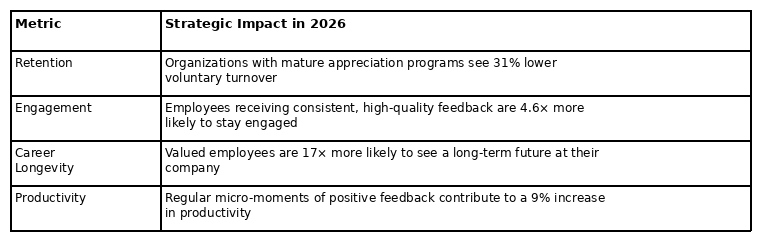
This shift reflects a deeper understanding of how to recognize employees in ways that feel authentic and lasting.
Kudoboard: Bringing The Best of Every Era Together
Kudoboard brings together the personal touch of traditional employee recognition awards with the flexibility of digital-first employee rewards software.
It recognizes that employees are human and that every organization has different needs.
Here are a few reasons why Kudoboard works for today’s workforce and can help companies with big and small recognition moments.
- While employee reward banquets and plaques worked in the past, Kudoboard can deliver something better. Group board reveals at meetings, which include a printable option, are more fun and more personal than a basic plaque. With group boards, employees can add thoughtful notes and multimedia to each board. Gift cards can be added easily, making them the perfect work anniversary or recognition gift.
- Instant sharing and easy integration of tools that companies use daily (like MS Teams, Slack, and more).
- Flexible options and pricing for companies. No matter your company size, Kudoboard has you covered. Kudoboard also offers flexible board types that offer something for every occasion.
- Kudoboard highlights the power of social recognition via social platforms. With the option of having multiple employees contribute, peer-to-peer recognition can be a strong tool.
- Printable memory books offer a persistent archive that employees can revisit again and again.
Examples of Kudoboards for Every Moment
Kudoboard can be helpful in many events, not just for regular, informal, or formal recognition, but for all the moments in between as well. Here are a few ideas:
New Hire Welcome Boards
Starting a new job can feel intimidating. To help ensure that new hires feel a sense of belonging, sending a welcome to the team Kudoboard can make all the difference.
Team members can make their welcome messages more personal with photos, videos, GIFs, and more.
Sending out welcome cards or having a new hire welcome event can make a big difference in establishing a strong company culture with new hires and a sense of belonging.
Service Anniversaries
Any type of milestone is a reason to celebrate an employee. Kudoboard makes this easy with online group cards that are easily shared and customizable to help celebrate any occasion. Whether it is a work anniversary or recognizing a farewell/retirement, there are unlimited options.
Recognition Tied To Employee Achievements
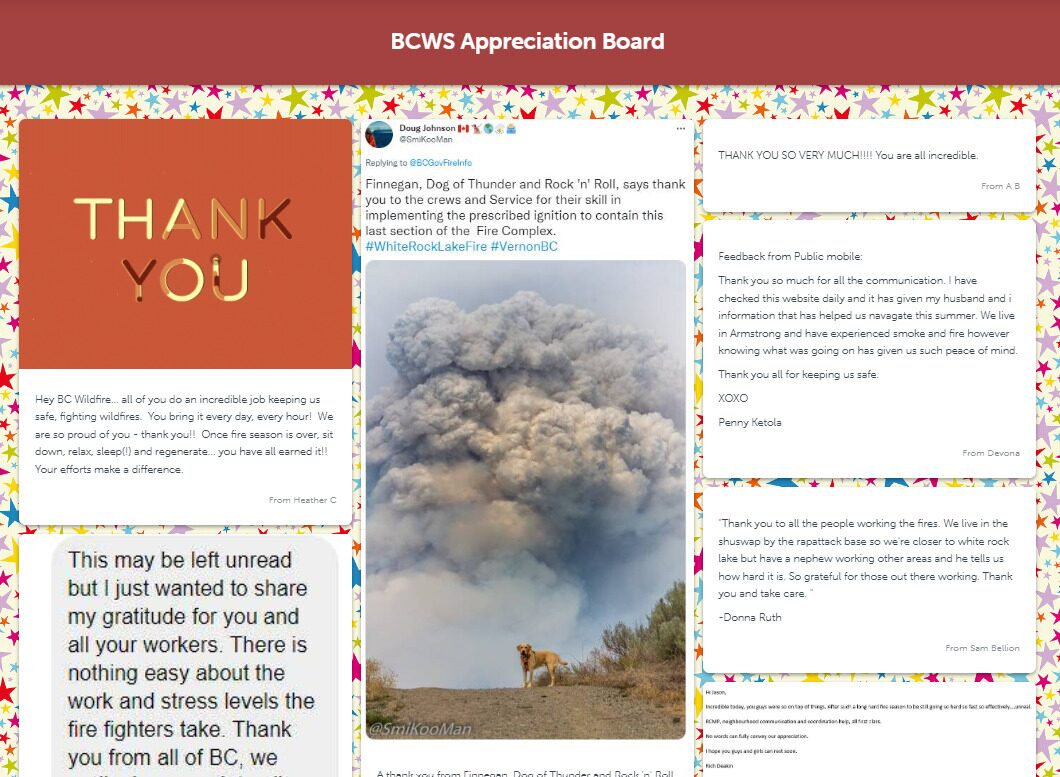
Celebrating the small and big wins is what makes employee recognition so special.
Gone are the days of just celebrating work anniversaries; now, employees are being recognized for their achievements, like achieving a team goal or simply thanking someone for being a great team member.
Company Values and Recognition
Recognizing an employee who has gone above and beyond with company values is another way to ensure that employee recognition is a cornerstone of your company culture.
To achieve this, have the company values visible and shared often.
Life Events
Easily celebrate weddings, birthdays, new babies, and more. Kudoboard makes personal milestones easy to celebrate with heartfelt group messages.
Adding a gift card to the group card is another great way to celebrate any life event.
Recognition Is Evolving, Are You In?
Employee recognition has transformed from formal awards and service award plaques to a more dynamic, digital experience that reflects the way we work today.
What hasn’t changed is the impact appreciation has on motivation, connection, and performance.
With the right tools, like the best employee recognition software, and a thoughtful approach, companies can build cultures where employees thrive for recognition in the workplace. To make recognition truly matter, deliver a Kudoboard today and see the difference recognition can make for your company.
FAQs: Employee Recognition Evolution
1. Why has recognition in the workplace become more frequent today?
Work has become faster, more collaborative, and often remote. Frequent recognition in the workplace helps employees feel visible and motivated, especially when supported by peer to peer recognition and real-time feedback through digital tools.
2. How do modern companies recognize employees effectively in 2026?
The best companies focus on timeliness, visibility, and relevance. They rely on the best employee recognition software and employee management tools to enable peer-led appreciation, align recognition with values, and track impact consistently.
3. What is the role of peer to peer recognition in modern workplaces?
Peer to peer recognition captures everyday effort that managers may miss. It builds trust, belonging, and collaboration, making it a foundational feature of modern rewards and recognition platforms.
4. Are employee recognition awards still relevant today?
Yes, but they’ve evolved. Employee recognition awards are now more personalized and often paired with digital experiences and employee rewards software, making them meaningful rather than purely ceremonial.
About the author: