
So you’re on the hunt for employee recognition software, and you want to make sure it actually works for your team.
No worries. This guide breaks down the most important features to look for, from ease of use and peer-to-peer recognition to automation, analytics, and integrations that matter in today’s workplaces.
On top of that, a quick comparison of real-time software options with their features has been included; choose the one that fits your team best.
Let’s dive in.
If you’re short on time, use this quick checklist of must-have employee recognition software features.
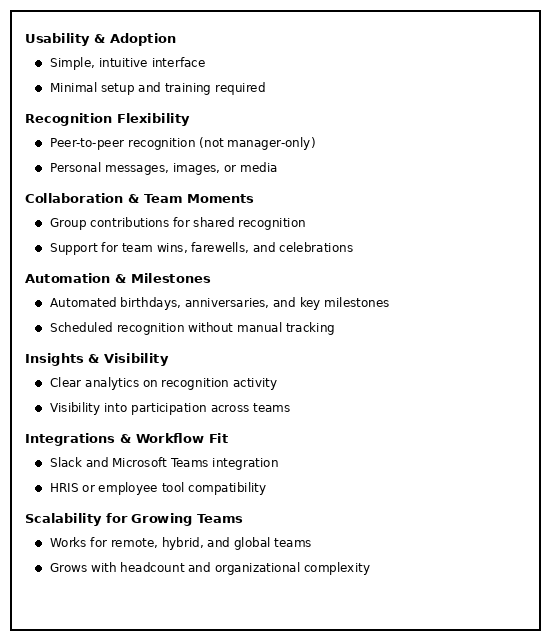
Why Employee Recognition Software Matters in 2026
The reason employee recognition software matters is pretty simple: it helps people feel valued, stay motivated, and stick around longer.
Once you add an appreciation app to your tech stack, you will:
Improve Employee Retention
Employee turnover is expensive and disruptive.
According to Gallup, employees who received high-quality recognition are 45% less likely to leave their jobs after two years.
When people feel seen and appreciated, they’re more likely to stay. Recognition software makes this consistency possible.
Boost Team Productivity
Recognition directly impacts performance.Research shows that happy employees are 13% more productive. In fact, 92% of employees repeat behaviors that get recognized. Employee recognition software reinforces the actions that drive results.
Reduce Burnout and Disengagement
Unrecognized effort leads to burnout.
Regular recognition makes everyday contributions visible, helping employees stay motivated and engaged instead of feeling overlooked or drained.
Build Stronger Company Culture
Culture shows up in daily actions.
When recognition happens often, respect and collaboration become part of how teams work, leading to a positive workplace culture, not just something written in a handbook.
Support Remote and Hybrid Teams
Remote work is now the norm, with the U.S. expected to have 36.2 million remote workers, a 417% increase from pre-pandemic levels.
In-person praise doesn’t scale in this environment. Employee recognition software keeps achievements visible across locations, helping remote and hybrid employees stay connected and valued.
Enable Peer-to-Peer Recognition
Recognition from managers is important, but it’s not everything.
Peer-to-peer recognition allows employees to appreciate each other in real time, creating a more inclusive and authentic recognition culture, because employees see things managers miss.
The Must-Have Features in Employee Recognition Software
Employee recognition software isn’t just a “kudos” tool anymore.
The best employee recognition software in 2026 helps teams recognize great work regularly, strengthen culture, and keep employees engaged.
Here’s what to look for when choosing the right platform.
1) Usability & Adoption
The best recognition program is useless if nobody uses it. If the tool is hard to use, there is no use.
What to look for
- A simple, intuitive interface (minimal clicks to recognize someone)
- Easy logins (SSO if possible)
- Easy navigation on both desktop and mobile
- Templates for common moments (wins, milestones, welcomes)
What this solves:
It removes friction. When recognition is easy, it becomes habitual, and consistent recognition in the workplace is what drives long-term culture change.
2) Recognition Flexibility
Recognition shouldn’t feel like a copied message. It should feel personal. A good platform supports different styles of recognition for different people and moments.
What to look for
- Personal messages that go beyond “great job.”
- Photos, GIFs, and video (especially for remote teams)
- Public praise + private recognition (depending on preference)
- Values-based recognition (tagging company values)
What this solves:
It helps employees feel genuinely seen and makes it easier for managers to learn how to recognize employees in a way that actually lands.
3) Peer-to-Peer Recognition
It’s not always that managers should recognize the outperformers. Peer-to-peer recognition helps employees appreciate each other’s daily contributions.
What to look for
- Easy peer shoutouts (not restricted)
- Team feed visibility (optional)
- Cross-team recognition
- Controls for sensitive recognition (if needed)
What this solves:
It turns appreciation into a shared habit, not a manager-only task. That’s a major driver in the benefits of employee recognition, including stronger belonging and better retention.
If you’re building a peer recognition in the workplace, explore Kudoboard’s guide to employee recognition and shout-outs.
4) Collaboration & Team Moments
Some moments need group recognition. For team wins, milestones, farewells, and employee recognition awards, collective messages matter.
What to look for
- Group contributions (many messages in one space)
- Easy invite links
- Optional reminders for contributors
- A lasting format employees can revisit
What this solves:
It creates “big moments” that employees remember. Team recognition builds relationships and strengthens identity.
Platforms like Kudoboard that support team celebrations make it easy for everyone to contribute messages, photos, and videos in one place.
5) Rewards & Incentives
Rewards can help, but they shouldn’t replace appreciation. The best employee rewards software keeps recognition as the focus.
What to look for:
- Reward flexibility (not “one-size-fits-all”)
- Global reward options for distributed teams
- Clear budgets and governance controls
- Recognition-first design (not “points-first”)
What this solves:
It adds motivation and participation, especially in early adoption, while still keeping the recognition message as the heart of the experience.
6) Automation & Milestones
Teams can miss important dates when everything is manual. So, automations like scheduled appreciation for birthdays, work anniversaries, onboarding welcomes, role changes, and team rituals (monthly wins, MVP, etc.)
What to look for
- Scheduled recognition delivery
- HRIS-synced milestone tracking
- Time zone-friendly posting
- Auto-reminders for team contributions
What this solves:
Automation ensures consistency – even during growth, reorganizations, or high workload periods.
7) Analytics & Insights
Recognition tools should work like real employee management tools, with analytics and insights that show what’s happening across teams.
What to look for
- Participation dashboards (org-wide + team views)
- Exportable reports
- Filters (teams, roles, regions)
- Insights that are easy to interpret
What this solves:
It helps leaders build a fair, inclusive program and avoid “recognition inequality” across departments.
8) Integrations & Workflow Fit:
If employees have to open a separate tool to recognize someone, usage drops.
Key integrations to prioritize: The best employee recognition software, Slack, Microsoft Teams, HRIS tools (Workday, BambooHR, ADP, Rippling, etc.), SSO (Okta, Google, Microsoft), and social sharing or intranet (optional).
What to look for
- One-click recognition inside Slack/Teams
- HRIS sync for employee info accuracy
- Integrations list that matches your stack
- Simple admin configuration
What this solves:
Tools that offer Slack and Microsoft Teams integrations (and other such platforms) make recognition easier to share where work already happens.
9) Scalability for Remote, Hybrid, and Global Teams
A platform might feel perfect for 20 people, but fail at 500. Scalability matters as teams grow and become more distributed.
What to look for
- Remote and hybrid support
- Role-based access permissions
- Team/department segmentation
- Stability at scale (performance and adoption)
What this solves:
It protects recognition culture as your company grows and becomes more complex.
Top Employee Recognition Software Options (Feature-Based Comparison)
You now know what to look for in employee recognition software. But which platforms meet the above requirements? Below, we list five options for you to consider in 2026:
1. Kudoboard
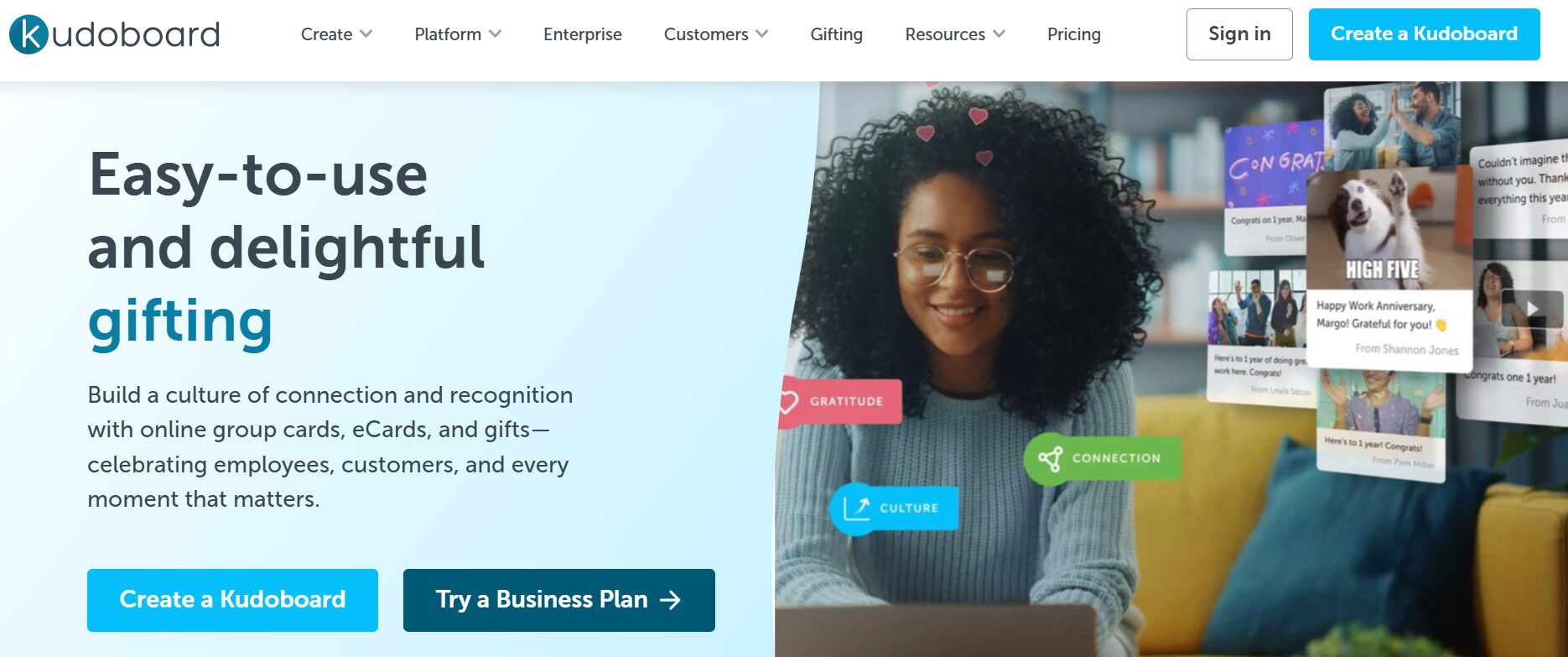
Kudoboard is best for meaningful team recognition, especially when you want many people to contribute to one celebration or award.
Core Recognition Features
- Collaborative boards and eCards for shoutouts and appreciation
- Supports media (photos/videos/messages) for personalized recognition
- Templates for common moments (wins, welcomes, milestones)
Collaboration and Group Recognition Strengths
- Built for group contributions in one place (great for awards and anniversaries)
- Works well for shared celebrations across teams and locations
Automation, Analytics, and Integrations
- Scheduling and milestone support (birthdays, anniversaries, events)
- Integrations with Slack, Teams, HRIS, and SSO providers
Best Fit For
Teams that want employee recognition awards, milestones, and group celebrations to feel personal and collaborative.
2. Bonusly
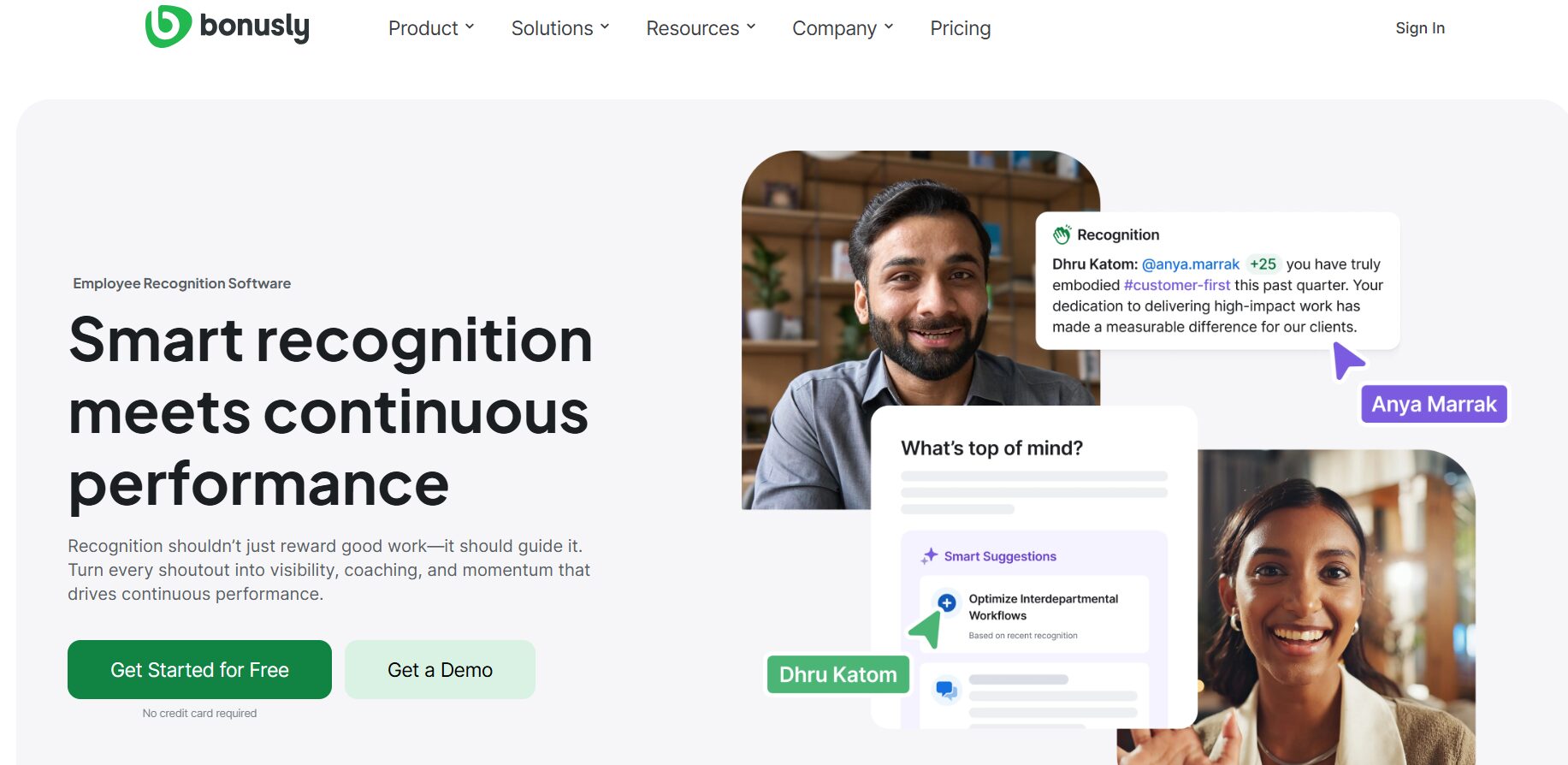
Bonusly is built for daily recognition using a points-based rewards model, usually delivered through a social feed and Slack workflows.
Core Recognition Features
- Public recognition feed and values-based recognition
- Peer-to-peer recognition as a daily habit
- Recognition posts can be quick and consistent
Collaboration and Group Recognition Strengths
- Strong visibility (everyone can see the recognition)
- Less focused on “one shared board” style group celebrations
Automation, Analytics, and Integrations
- Slack integration supports recognition, rewards, and milestone reminders
- Admin analytics focused on participation and usage
Best Fit For
Organizations that want employee rewards software tied closely to frequent peer recognition.
3. Workhuman
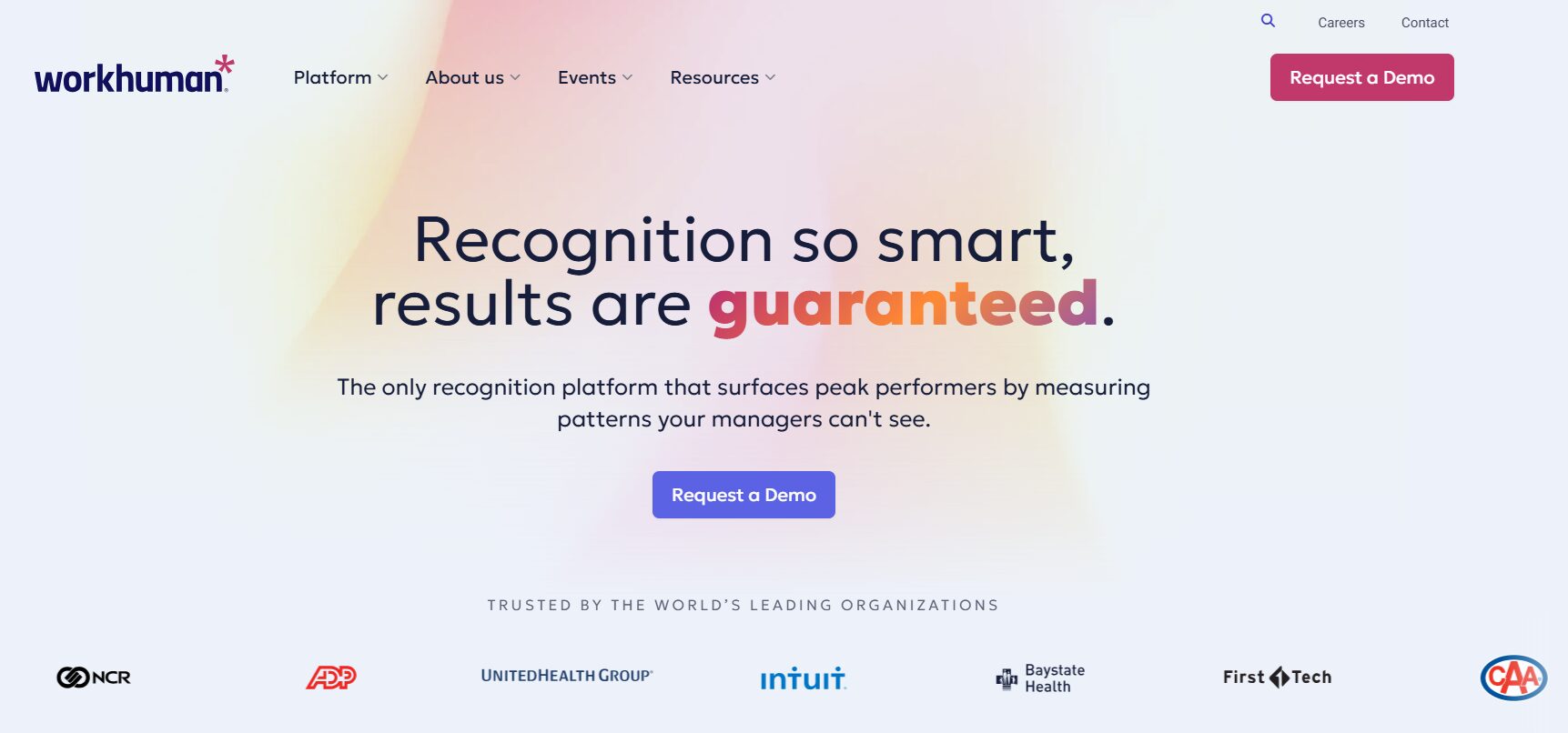
Workhuman is an enterprise platform focused on structured recognition programs and deep analytics, including Workhuman iQ insights.
Core Recognition Features
- Enterprise recognition programs with governance controls
- Designed for company-wide recognition programs and consistency
Collaboration and Group Recognition Strengths
- Strong program support across departments and large teams
- Better suited to structured initiatives than lightweight celebrations
Automation, Analytics, and Integrations
- Workhuman iQ provides advanced reporting and AI-driven insights
- Integrates into enterprise HR ecosystems
Best Fit For
Large organizations where analytics, compliance, and reporting are priority requirements.
4. Achievers
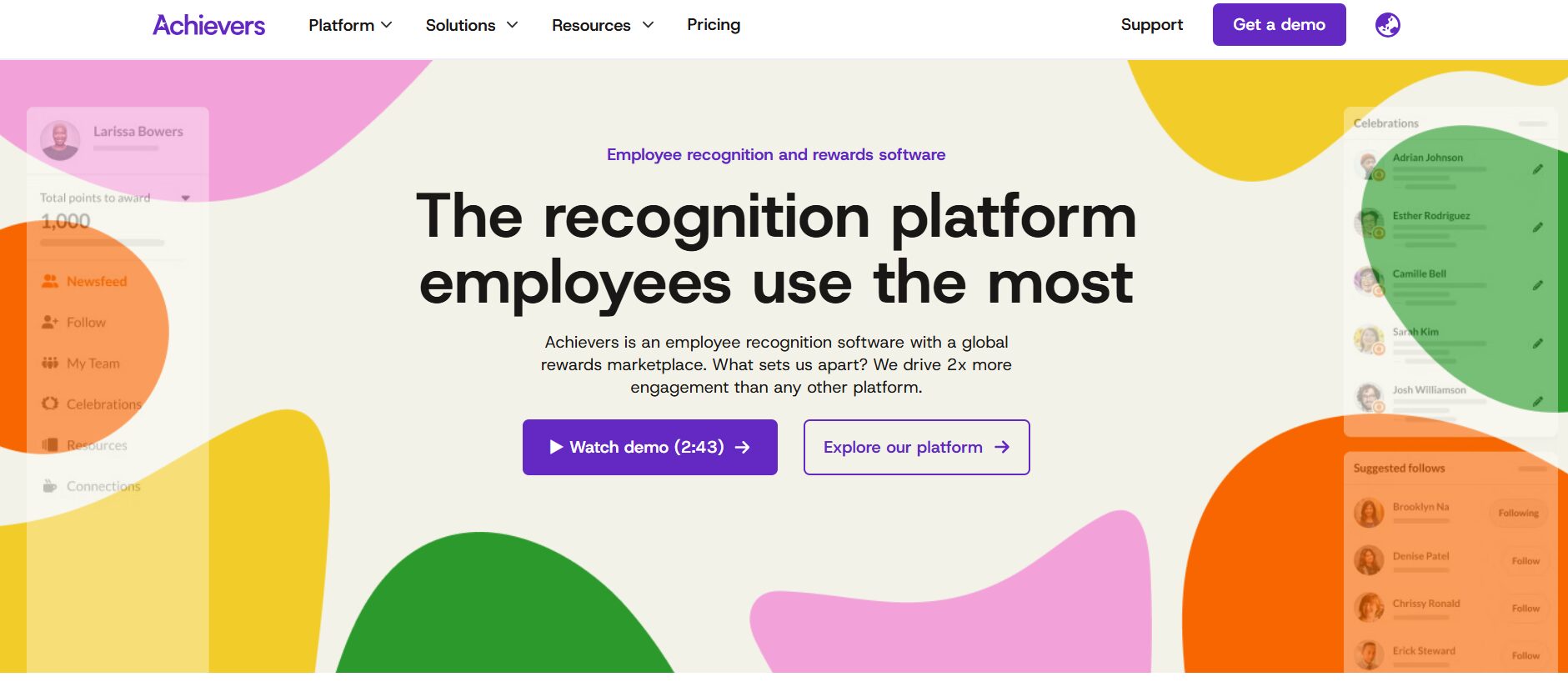
Achievers is designed for enterprise recognition plus a global rewards marketplace, making it a strong rewards-first option.
Core Recognition Features
- Peer and manager recognition programs
- Structured recognition tools for enterprise environments
Collaboration and Group Recognition Strengths
- Strong support for recognition programs at scale
- Good for organizations that want broad participation across regions
Automation, Analytics, and Integrations
- Built for large-scale reporting and program visibility
- Integrations designed for enterprise workflows
Best Fit For
Organizations that want a full rewards marketplace as a central part of recognition.
5. Nectar
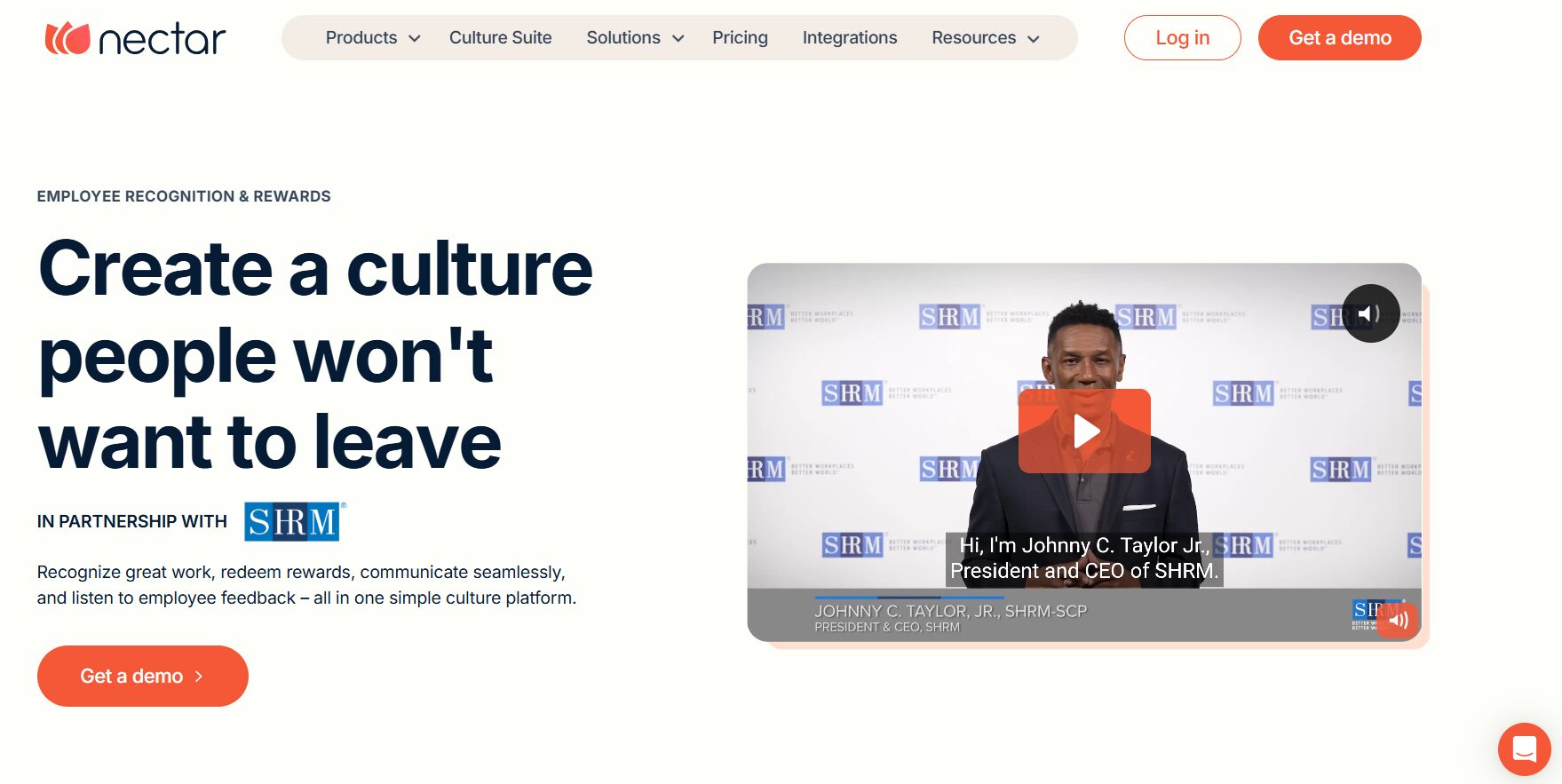
Nectar is an all-in-one platform. It combines recognition and rewards with internal announcements, making it useful for teams that want comms and recognition in one place.
Core Recognition Features
- Recognition feed + shoutouts
- Supports daily recognition and basic program setup
Collaboration and Group Recognition Strengths
- Strong for visibility and internal communication
- Less focused on group “board-style” celebrations than Kudoboard
Automation, Analytics, and Integrations
- Scheduling and announcement automation
- Reporting and adoption insights
- Pricing and plan details are published clearly
Best Fit For
SMB and mid-market teams that want a single tool for recognition + rewards + internal communication.
Our Success Story
Here’s a real example of Kudoboard in action.
The Challenge: Patagonia wanted an easier way to celebrate birthdays and work anniversaries (“Pataversaries”) with recognition that felt personal and included the whole team.
Why They Chose Kudoboard: With Kudoboard, they used one shared board where coworkers could quickly add messages (and photos) in one place, without chasing people or running long email threads.
The Result: celebrations became easier to run, participation went up, and employees received richer, more meaningful recognition from multiple teammates.
Read the full story: Patagonia uses Kudoboard to celebrate employees
Choose the Right Employee Recognition Software
The right employee recognition software will transform your organization. Focus on platforms that make appreciation easy, meaningful, and collaborative.
Whether you’re celebrating a work anniversary, acknowledging daily contributions, or recognizing a major achievement, the tool you choose should bring your team closer together.
Still stumped? Try Kudoboard. Our top-rated solution is easy to use, includes powerful features for employee engagement and metrics tracking, and integrates with hundreds of other apps.
FAQs About Employee Recognition Software
Can employee recognition software integrate with workplace communication tools?
Yes. The best employee recognition software integrates with Slack and Microsoft Teams, so recognition in the workplace happens in the tools employees already use. Many platforms also connect with HRIS and other employee management tools.
What’s the difference between recognition software and a rewards program?
Recognition software helps you recognize employees through appreciation messages, shoutouts, and employee recognition awards. A rewards program focuses on incentives like points, gift cards, and perks. Many rewards and recognition platforms combine both.
What are the best employee recognition programs?
The best employee recognition programs are consistent, frequent, and inclusive. They support peer-to-peer recognition, reward meaningful behaviors tied to company values, and make recognition visible across teams. The strongest programs also use rewards and recognition platforms to automate milestones and track participation.
What is a common mistake in employee recognition programs?
A common mistake is making recognition infrequent or manager-only. When recognition isn’t consistent, or only a few teams participate, it creates “recognition gaps” and feels unfair. The best programs avoid this by enabling peer recognition, celebrating milestones, and using analytics to ensure recognition is evenly shared.
About the author: