
Hospital administrators everywhere are asking themselves the same question: “How do we improve patient experience and the overall patient care experience when our budget is already stretched thin?”
Healthcare budgets are tight, but patient expectations aren’t, and that puts providers in a tough spot. The good news? You don’t need expensive renovations or flashy technology to make patients feel cared for. This article shares 10 simple, affordable ways to improve the patient care experience using creativity, intention, and people-first thinking.
For readers in a hurry, read the following list.
- Recognition boards: Boost staff morale by celebrating wins publicly in break rooms and nursing stations.
- Gratitude walls: Reduce patient anxiety by displaying real success stories and thank-you notes in public areas.
- Employee recognition program: Create a culture where great work is consistently noticed, rewarded, and repeated.
- Simple signage: Cut confusion and frustration by making directions, wait times, and care details easy to find.
- Donation-based comfort amenities: Improve comfort with donated blankets, books, chargers, and local business partnerships.
- Real-time feedback loops: Collect feedback during the visit so you can fix problems before patients leave unhappy.
- Low-cost wellness initiatives: Prevent burnout with quiet rooms, peer support, and discounted wellness partnerships.
- Bedside manner training: Improve empathy and communication through short, ongoing coaching and role-playing.
- In-house patient education: Build trust with clear, jargon-free resources that explain conditions, procedures, and next steps.
- Community connection programs: Strengthen loyalty and reputation through volunteers, outreach events, and local art displays.
What is Patient Experience?

The term “patient experience” refers to every interaction a person has with your healthcare system, from scheduling their first appointment to following up after treatment, across both in-person and digital patient experience touchpoints. Your goal is to make these interactions as enjoyable as possible while achieving positive medical outcomes.
The key components of patient experience include:
- Communication: All staff should prioritize clear and compassionate communication. Doing so will help make stressful situations more manageable for patients.
- Care Coordination: Patients should feel secure and confident in their care. This will require your staff to ensure proper handoffs between shifts and/or departments.
- Physical Environment: Clean, well-lit spaces with comfortable seating and clear signage create a more welcoming atmosphere for all patients.
- Emotional Support: Health problems are scary. An emotionally supportive team makes patients valuable and important, not just another to-do list item.
- Patient Preferences: While there are limits, healthcare providers can build a better patient experience by honoring each patient’s cultural differences, religious beliefs, etc.
- Family Involvement: Patients rarely battle health issues alone. As such, the best patient experiences extend to family, friends, and other loved ones.
Once your hospital, clinic, or long-term care facility builds a better patient experience, it strengthens its reputation. This is achieved through intentional patient experience programs and scalable patient experience solutions, leading to improved financial performance.
The Link Between Provider Happiness and Patient Experience
Patient experience and employee satisfaction are inextricably linked, especially when healthcare organizations prioritize improving patient experience alongside staff well-being.
When doctors, nurses, and support staff feel valued, they’re more likely to go above and beyond for patients. They’ll smile more, listen better, and approach their work with a contagious energy.
Conversely, burned-out, stressed, or unhappy employees tend to provide less empathetic care. They focus on “getting the job done” rather than connecting with patients in meaningful ways. This has consequences that almost always lead to a worse patient experience.
The research backs this up. A recent study found that 25.2% of patient satisfaction can be attributed to the satisfaction of the patient’s healthcare workers. In other words, you can’t take care of your patients without first taking care of your staff.
10 Low-Cost Ways to Enhance Patient Experience
Patient experience is important. But as we just learned, you can’t create a positive experience for patients unless you build a positive employee experience first.
Here, we share 10 low-cost ways to enhance the patient experience, either directly through things like patient gratitude walls or indirectly via employee recognition programs.
1. Create Recognition Boards in Staff Areas
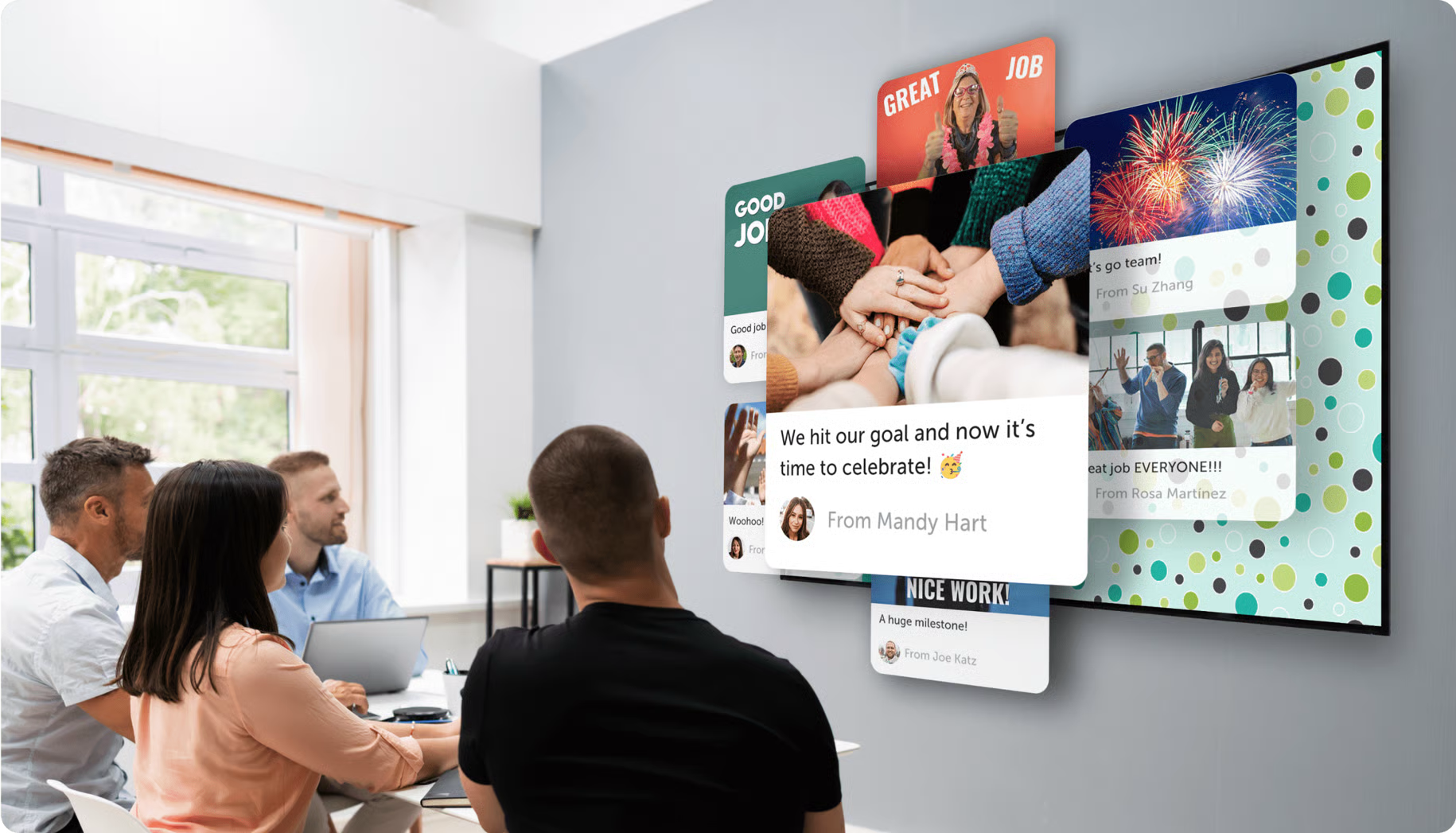
Nothing boosts morale like public recognition, and recognition boards are one of the most cost-effective ways to celebrate your team’s achievements.
Set up a bulletin board in every break room and nursing station. Then, fill each one with patient thank you letters, peer recognition notes, milestone celebration cards (for work anniversaries, certifications earned, etc.), and photos of staff members who go above and beyond.
Or, take a more forward-thinking approach and recognize healthcare workers via ecards. Tools like Kudoboard make it easy to appreciate employees.
Simply choose one of our professionally designed templates, write a personalized message, invite other team members to contribute, and send it off. You can even attach gift cards or turn the final product into a physical keepsake.
Both bulletin boards and ecards will make employees feel valued. They will also reinforce positive behaviors. Other team members will see them and think, “I want to be up there too!”
2. Install Gratitude Walls in Patient Areas
If recognition boards are for staff, gratitude walls are their patient-facing counterpart.
These displays showcase success stories, positive testimonials, and even thank-you notes from patients in high-traffic areas throughout your clinic, like lobbies and waiting rooms.
The impact on incoming patients is profound. When people see that others have had a positive experience at your facility, it will immediately reduce their anxiety. They’ll think, “If this hospital was good enough for these other patients, it’s probably good enough for me too.”
Keep content fresh by actively soliciting new testimonials and rotating displays every month. That way, you have access to authentic stories and can use them to improve your marketing.
3. Implement a Full Employee Recognition Program
Recognition boards are nice, but improving the patient experience requires something more intentional: a full employee recognition program.
An employee recognition program is a standardized way to acknowledge people for the hard work they do, and in healthcare, that matters a lot. Your team works in high-stress, high-stakes environments, often for long hours, and frequently goes beyond their job descriptions (like supporting anxious families or covering extra shifts). Too often, that effort goes unnoticed.
A strong recognition program fills that gap and helps create a culture where great work is seen, valued, and celebrated.
What An Effective Recognition Program Includes
Successful programs operate on multiple levels and feel consistent, not random.
- Manager-to-employee recognition: Recognition should be frequent, timely, and specific.
- Train supervisors to actively look for positive actions
- Encourage immediate acknowledgment through:
- A personal note
- A public shoutout
- A small physical or digital reward
- Peer-to-peer recognition: Appreciation shouldn’t only flow top-down.
- Create space for peer-to-peer recognition
- Tools like Kudoboard make this easy with virtual praise walls
- Staff can send notes, photos, or videos, and coworkers can jump in to celebrate too
Why it works
Employee recognition programs are often:
- Easy to set up
- Low-cost to maintain
- High-impact on morale and engagement
And when staff feel appreciated, supported, and motivated, it shows up where it matters most, in the patient experience. That’s why employee recognition is a key strategy for healthcare organizations looking to improve care in 2026 and beyond.
4. Enhance Communication Through Simple Signage
Clear, helpful signage is one of the most overlooked aspects of the patient experience.
Walk your facility like a first-time visitor and check:
- Can you spot signs immediately after entering?
- Are they large enough to read without squinting?
- Do they appear at every decision point (turns, elevators, hallway splits)?
- Are the key areas easy to find? (Bathrooms, cafeteria, departments)
- Are staff getting fewer “Where is…?” questions?
5. Create Comfort Amenities from Donations and Partnerships
Comfort amenities, such as magazines, books, and blankets, improve the patient experience. But if you’re not careful, purchasing these things will eat up your budget.
Fortunately, community partnerships and donation drives are viable solutions. Ask local stores, libraries, and/or community groups to contribute these items. Most will be happy to donate when they can, especially when they know the donations will support sick patients.
Of course, comfort amenities take many forms. You could connect with a local coffee shop and ask the owner to provide complimentary beverages in waiting areas. Or talk to a local tech store and ask if they can give you a discount on X number of phone chargers. Or contact a local internet provider to improve WiFi connectivity in patient areas for a reduced fee.
Coordinating partnerships and donations requires effort. But once systems are established, said partnerships and donation channels often become self-sustaining.
6. Establish Patient Feedback Loops
Most hospitals collect feedback after discharge, when patients have moved on, and their memories are fading. Real-time feedback collection is often a better approach and a foundational element of modern patient experience software and digital patient experience strategies.
Simple feedback collection methods tend to work best:
- Comment cards that can be filled out at nursing stations
- Regularly posted QR codes that link to brief patient surveys
- Tablets in waiting areas that allow patients to share their thoughts
When creating patient feedback surveys, keep them brief. Questions like “How was your experience?” and “What can we do better?” are easy to answer, but provide valuable insight.
The key is closing the feedback loop. When patients provide input, follow up directly. If someone mentions long wait times, have a manager go and explain the delay and apologize. When improvements are made, communicate those changes back to future patients.
7. Develop Staff Wellness Initiatives on a Shoestring
A burned-out staff can’t provide exceptional patient care, but comprehensive wellness programs don’t have to be expensive. Simple, thoughtful initiatives can have the biggest impact.
Mental health support starts with a safe space for staff to decompress. Convert unused rooms into quiet break areas that have comfortable seating, soft lighting, and a no-work-talk policy. Then do your best to accommodate different personality types and needs. Some people recharge through social interaction; others need solitude. Provide options for both.
You should also establish peer support groups where staff can discuss challenges and share coping strategies. And consider partnering with local wellness providers who will offer their services to your team at a discounted rate. We’re talking about yoga instructors, massage therapists, and professional nutritionists. The return on these investments will be huge.
8. Implement Bedside Manner Training and Refreshers

Technical skills get people hired, but bedside manner keeps patients satisfied and complimentary. The good news? Communication skills can be taught, practiced, and improved.
Develop in-house training programs using existing expertise. Identify staff members with exceptional patient interaction skills and have them lead peer coaching sessions. For example, role-playing scenarios can help staff practice difficult conversations in a safe environment.
Focus training on core skills: active listening techniques, empathy expression, clear procedure communication, and de-escalation strategies for frustrated patients.
Make training ongoing rather than one-time. Brief refresher sessions during staff meetings, monthly communication challenges, or peer feedback partnerships help keep skills sharp.
And remember: the most effective training programs are interactive and practical. Theoretical discussions about empathy are less valuable than role-playing scenarios in which healthcare workers have to respond to a patient’s vocalized fears about an upcoming procedure.
9. Create Patient Education Resources In-House
Because confused patients ≠ happy patients
Let’s be honest: patients feel better when they actually understand what’s going on. When they’re informed, they feel more in control, more confident, and more satisfied with their care. (Mystery is great for novels, not for healthcare.)
How to do it well:
- Tap into your clinical experts:
- Your staff already has the knowledge, now it’s about translating it.
- A cardiologist can explain what really happens during a cardiac catheterization.
- An orthopedic nurse can share a clear, step-by-step post-surgery care guide.
- Mix up the formats:
- Text is great. The video is even better.
- Thanks to smartphones and basic editing tools, professional-looking explainer videos are easier than ever, and often more engaging.
- Go multilingual whenever possible:
- Serving a diverse patient population means meeting people where they are.
- AI tools can help with translation.
But for accuracy? Partner with bilingual staff or community organizations.
10. Establish Community Connection Programs
Healthcare happens within communities, and strong community connections benefit everyone. These programs create goodwill, provide valuable services, and generate positive publicity.
So, connect with community volunteer programs to provide companionship to patients and assistance with non-medical tasks. Volunteers can also offer an extra pair of hands to staff.
Start an educational outreach program to position your facility as a community resource beyond just treating illness. Health fairs, preventive care seminars, and wellness workshops build relationships and demonstrate your commitment to community health.
And try to partner with local artists to display rotating exhibitions in lobbies and hallways. Art creates conversation, provides visual interest, and supports local talent. Most artists would be thrilled to display their work to a larger audience, especially if it can help sick people in need.
The investment is primarily in coordination and program management, but the returns, like community goodwill, positive reputation, and patient loyalty, extend far beyond the direct costs.
Measuring Success Without Expensive Analytics
You don’t need sophisticated analytics platforms or expensive patient experience software track improvements in patient experience. Simple metrics often provide clear insights you can use to move forward.
For example, you can track the ratio of patient complaints to compliments. Are thank-you notes increasing? Are complaint calls decreasing? If the answer to both is yes, you’re in a good spot.
You should also monitor employee retention metrics as part of a holistic patient experience program focused on improving patient experience outcomes. Happy team members stay longer, which helps them provide better care to patients. Do you retain your staff for longer than the industry average? If not, conduct exit interviews to reveal why employees leave.
If you want to know what your employees and patients think about your hospital, clinic, or long-term care facility, ask them. Google Forms can be used to create surveys and collect structured feedback without major expense (or any expense at all). Use this tool!
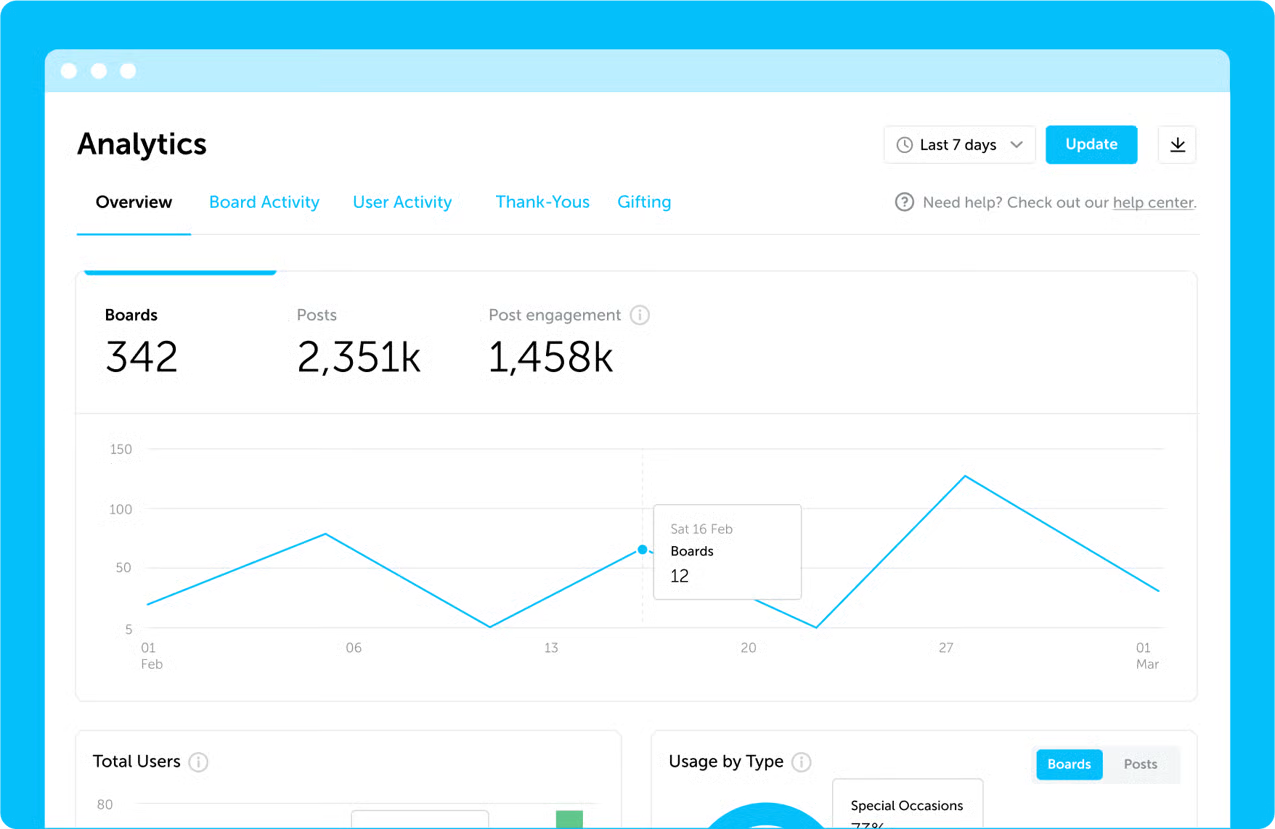
If you’re a Kudoboard user, you’ll get access to an entire analytics dashboard as part of your subscription. This feature will help you determine who participates in your employee recognition program, how often they participate, and how to improve your approach in this area.
Build a Better Patient Experience With Kudoboard
You don’t need a massive budget to improve the patient experience or implement meaningful patient experience solutions. You just need a bit of creativity and the genuine desire to make healthcare more human.
You also need to realize that patient experience and employee satisfaction are linked. When you take care of your staff, they take care of your patients, creating a stronger patient care experience and more sustainable patient experience programs.
As such, recognition programs, wellness initiatives, and the like create a continuous cycle that leads to positive results.
When it comes to employee recognition programs that support improving patient experience and strengthening the digital patient experience, think Kudoboard. Our platform is easy to use and powerful. These are just two reasons why healthcare teams across the country love it.
Better Patient Experience Starts with Valued Staff
FAQs on Enhancing Patient Experience
1. What are the best ways to improve patient satisfaction in healthcare?
The best ways to improve patient satisfaction are faster updates, kinder communication, and a smoother visit. Focus on staff training, timely follow-ups, clean and comfortable spaces, and easy ways for patients to share feedback during their visit.
2. How can hospitals improve patient experience?
Hospitals can improve patient experience by improving communication, reducing confusion, and showing more empathy. Simple ways include clearer signage, staff introductions, real-time wait time updates, patient feedback surveys, and better patient education materials.
3. What are the 5 pillars of patient experience?
Elevate care with these five pillars of patient experience: effective communication, timely access to care, personalized engagement, staff empathy and training, and continuous feedback collection
4. How do you ensure a positive experience for patients and visitors?
Staff personally engage with everyone they encounter, introduce themselves, focus on information important to patients and visitors, provide an opportunity for questions, and show gratitude.
About the author: