
Staff wellbeing directly influences patient outcomes. When a healthcare provider feels valued and engaged, patients notice. When staff are burned out, patients can sense it as well.
The solution isn’t to hire more people or reduce workloads, though this strategy wouldn’t hurt. Hospitals, private clinics, and long-term care facilities need to foster cultures where gratitude and appreciation flow freely among colleagues and naturally extend to patient interactions.
Healthcare systems that prioritize gratitude create something remarkable: a transformation from burnout to belonging that elevates staff satisfaction and the overall patient experience. In this article, we examine the science behind this phenomenon and ways to cultivate gratitude.
Key Takeaways
- Employee appreciation is not a morale perk. It is a measurable driver of staff engagement, reduced burnout, and stronger clinical performance.
- Healthcare organizations that embed workplace appreciation into daily routines see clear improvements in trust, communication, and team collaboration.
- Simple recognition efforts, including a well-timed letter of appreciation, reinforce positive behaviors without disrupting demanding workflows.
- Gratitude lowers stress and supports better decision-making, which directly contributes to improving patient experience.
- When healthcare professionals feel valued, patients experience care as more compassionate, coordinated, and human.
The Burnout Crisis Putting Patients at Risk

In 2021, during the height of the pandemic, 62.8% of physicians were burned out. Today, 45.2% of physicians are burned out. So, while things are improving, nearly half of all doctors experience emotional exhaustion, depersonalization, and a reduced sense of accomplishment.
Nurses face even steeper challenges, with younger nurses showing the highest susceptibility to burnout. The result? Resignations across the industry are leading to significant staffing shortages.
Burnout damages patient experience in measurable ways. Emotionally exhausted staff struggle to maintain the empathy and compassion that patients need. When providers feel depleted, their interactions become transactional rather than therapeutic.
Plus, higher turnover rates create understaffing situations. As such, remaining team members feel rushed, leading to shorter patient interactions and less time for explanation and comfort.
- Worst of all, medical errors increase when staff are mentally exhausted, partly because burnout impairs decision-making capabilities and attention to detail.
Finally, healthcare research shows a correlation between staff engagement and patient satisfaction. When healthcare workers feel engaged and valued, the hospital’s patient global ratings go up. Conversely, when staff morale plummets, patient satisfaction follows suit.
The Science Behind Gratitude’s Healing Power
Gratitude has a measurable neurological and psychological impact that directly influences performance in modern healthcare settings.
When healthcare professionals feel appreciated, their brains activate dopamine and serotonin pathways, which can support:
- Emotional balance
- Sustained motivation
- Greater resilience over time
Simple practices such as employee appreciation or a thoughtful letter of appreciation help reinforce these effects beyond momentary morale boosts.
Gratitude also plays a critical role in stress regulation. High-pressure clinical environments elevate cortisol levels, which can impair:
- Judgment
- Emotional control
- Composure during difficult interactions
Regular expressions of appreciation help lower cortisol, enabling better composure during emergencies and challenging patient interactions.
Professionals working in appreciative environments show stronger focus, clearer decision-making, and greater resilience during demanding shifts.
These benefits improve communication among care teams and contribute directly to improving patient experience, as patients perceive care as more coordinated and compassionate.
Gratitude is also contagious. When appreciation is openly expressed, it spreads across teams, shaping a calmer, more cohesive atmosphere that supports both clinician well-being and patient recovery.
The Critical Role of Manager-to-Employee Appreciation

Manager to employee appreciation is the key to a positive workplace culture.
When supervisors acknowledge staff contributions, employees feel seen and valued. These feelings lead to higher engagement, greater motivation, and ultimately, patient-centered care.
Where Most Healthcare Managers Go Wrong
Many healthcare managers focus on correcting mistakes instead of acknowledging strong performance. This problem-first mindset creates unnecessary tension. When supervisors reach out, staff often assume the conversation will involve criticism and become defensive.
Consistent employee appreciation changes this dynamic. Recognizing team contributions, whether verbally or through a brief letter of appreciation, builds trust and psychological safety. Employees feel valued rather than scrutinized.
When appreciation becomes part of leadership practice, engagement improves, and teams perform with greater confidence. Communication strengthens, morale rises, and improving patient experience becomes a natural outcome rather than a forced initiative.
How to Excel at Manager-to-Employee Appreciation
To make manager-to-employee appreciation work in healthcare, recognition has to be intentional, fast, and easy to deliver across shifts. That’s why eCards are a great option in workplace appreciation. The structure below makes it skimmable and actionable.
1) Build recognition into existing routines
Use daily huddles to highlight excellent patient care from previous shifts.
This reinforces positive behaviors while building collective pride, without adding extra meetings or admin work.
2) Recognize in real time (without disrupting care)
Use eCards for quick, personalized appreciation.
Managers can send short notes to doctors, nurses, and administrative staff when they go above and beyond, especially in moments that improve patient comfort or solve problems quickly.
Why eCards work well in healthcare:
- Created and sent in minutes
- Works across shift-based schedules
- Staff can read them when convenient
- Supports photos or short videos for added meaning
- Functions like a modern letter of appreciation, but faster
Tools like Kudoboard make this even easier with automation. Managers can choose a template, personalize the message, and send instantly through email, text, or internal channels.
3) Make standout appreciation last
When recognition deserves staying power, turn digital messages into physical keepsakes, like posters or printed books, that teams can display proudly in staff areas.
Building Peer-to-Peer Appreciation Among Healthcare Teams
Healthcare is the ultimate team sport. Successful patient outcomes depend on seamless collaboration between departments, shifts, and disciplines.
Sadly, traditional healthcare cultures focus more on solving problems than celebrating successes. This approach leads to missed opportunities to build mutual appreciation and strengthen team bonds. Is it any wonder that burnout abounds in healthcare?
Peer recognition hits differently than management appreciation. When a night shift nurse receives thanks from the day shift team, or when an OR technician gets acknowledged by surgeons, it creates a community environment that fuels engagement and performance.
Why Peer-to-Peer Appreciation is Hard in Healthcare
Several barriers prevent peer gratitude in healthcare settings. For example, high-pressure environments leave little time for workplace appreciation, while hierarchical structures can discourage cross-department recognition. Many healthcare professionals also feel uncomfortable expressing gratitude, seeing it as unprofessional.
Your hospital, clinic, or long-term care facility needs to overcome these barriers to create the kind of atmosphere that reduces burnout and leads to a positive patient experience.
How to Promote Peer-to-Peer Appreciation in 2026
There are plenty of ways to promote peer-to-peer appreciation in the healthcare industry. For instance, you could use a tool like Kudoboard to create digital recognition boards for your team. That way, when an employee sees a colleague go above and beyond, they can add a quick message and/or photo to the board to congratulate them on a job well done.
You can also encourage your staff to make “gratitude rounds” during shift changes. Basically, outgoing staff thanks incoming teams for their support, while incoming staff acknowledges the work completed during previous shifts. These 30-second interactions build mutual respect.
Transforming Provider-Patient Relationships Through Gratitude
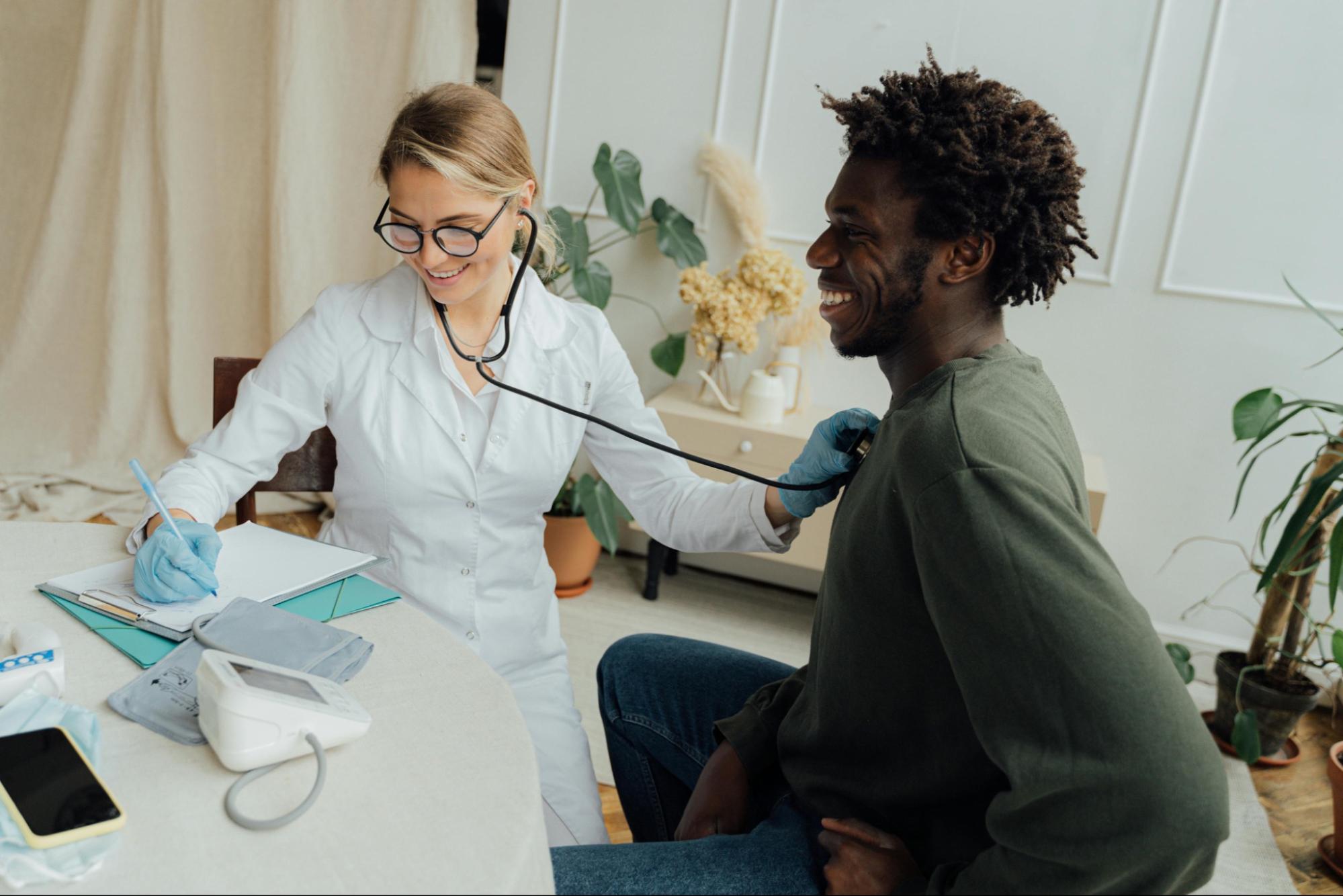
Most provider-to-patient relationships focus on diagnosing problems and providing solutions. While clinically necessary, this approach often misses opportunities to strengthen bonds, opportunities that present themselves via workplace appreciation and acknowledgment.
When providers express gratitude to patients, they fundamentally shift the relationship dynamic. Instead of positioning patients as problems to solve, gratitude frames patients as partners in care whose courage, compliance, and trust deserve recognition.
How to Promote Provider Gratitude in Healthcare
Provider gratitude starts with acknowledging patient choice and perseverance.
Simple statements like:”Thank you for trusting us with your care,” or “I appreciate your patience during this difficult process,” validate patient experience while building rapport.
Providers can also express appreciation for treatment compliance, recognizing the effort patients put into following complex medication schedules. They can celebrate patient progress with statements like, “You’re improving, thanks for your dedication!” as well. Simple messages like this encourage patients to continue engaging with treatment plans.
One more thing: top healthcare providers realize that patients rarely battle illness alone. Because of this, they take time to express gratitude to family members and friends, too. Thank loved ones for their assistance in creating a more inclusive care environment.
Patient responses to provider gratitude are remarkable. When patients feel appreciated, they tend to be more satisfied with their care and demonstrate better health outcomes.
Creating Visible Gratitude In Healthcare Environments
What do patients see when they enter your healthcare facility? Hopefully, they see evidence of appreciation in the form of patient testimonials, staff messages, and more.
Healthcare Lobbies
Healthcare lobbies offer prime real estate for patient gratitude initiatives. A digital display that showcases patient thank-you notes creates a powerful first impression.
To set one up:
- Generate QR codes that link to the board.
- Allow patients to write appreciation messages.
(Note: you can do something similar with a physical board, though physical notes are harder to display.)
These kinds of patient gratitude displays show incoming patients that they’re entering a place where individual care providers are valued and recognized for their compassion.
Staff-Only Areas
Staff-only areas offer another opportunity to reinforce recognition. Physical or digital gratitude displays in break rooms can highlight management-to-employee and peer-to-peer employee appreciation, rather than patient-facing messages.
Team Milestones
These boards can also be used to celebrate team milestones, such as:
- Industry recognition
- Positive media coverage, or
- Long-term goals are achieved through sustained effort
This type of internal recognition functions as an ongoing letter of appreciation, reminding healthcare professionals why their contributions have lasting value.
No matter what kind of visual gratitude display you have in mind, Kudoboard can help. Our platform allows users to display patient messages, staff notes, or any other form of digital appreciation in a collage-style format that’s fun to look at and uplifting.
How to Overcome Common Implementation Challenges
Healthcare leaders must overcome obstacles to implement a gratitude initiative. Healthcare teams often face real constraints that slow the adoption of new initiatives.
Common Barriers
Limited time and demanding workloads make employees hesitant to change established workflows. Some staff may also question the value of recognition efforts, creating resistance to employee appreciation initiatives.
Budget and Adoption Concerns
Budget considerations add another layer of complexity. Implementing a gratitude program may require investment in digital platforms, physical displays, or brief training sessions to ensure proper use. Without clear communication, these tools risk being underutilized.
What Works in Practice
Successful organizations address these challenges proactively. Starting with a small pilot allows gratitude practices to integrate into existing routines without disruption. As engagement grows and benefits become visible, programs can scale gradually, supporting staff morale while contributing to improving patient experience across the facility.
Make It Sustainable
Finally, invest in ongoing training so that your employees know how to display gratitude and why doing so matters. Then give them new reasons to display gratitude every month. For example, you can run challenges that encourage gratitude in exchange for fun perks or prizes.
Measuring Gratitude’s Impact on Patient Care
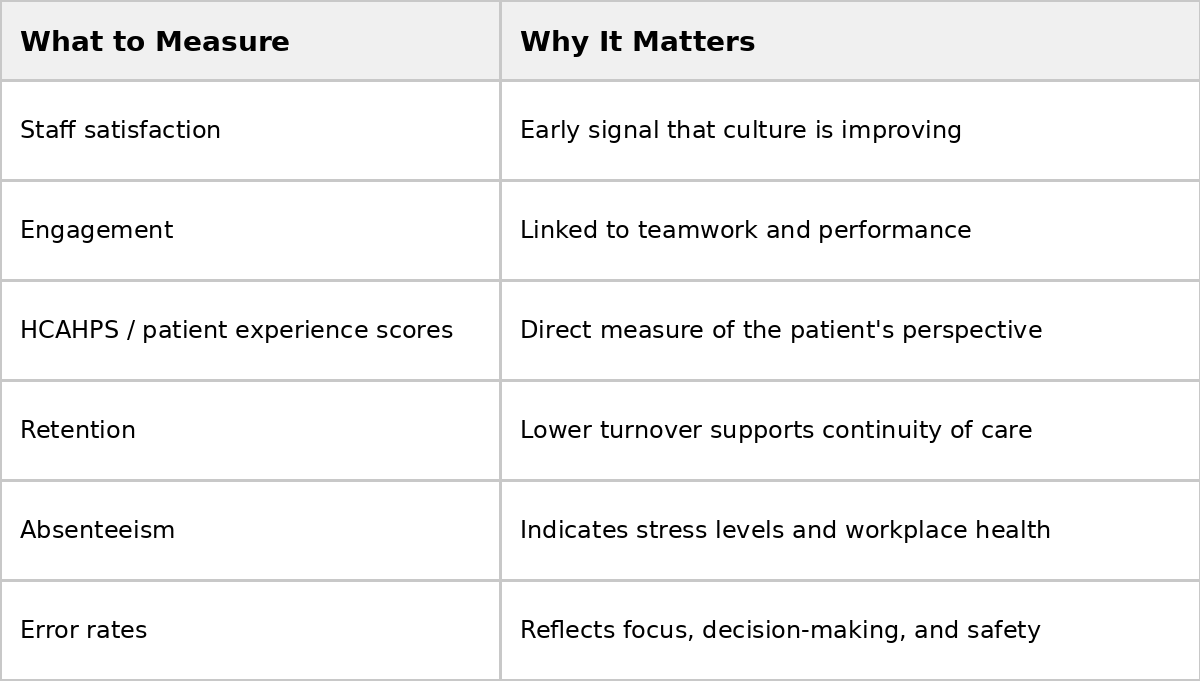
Is your gratitude initiative working? To prove impact (and justify investment), you need clear, trackable metrics.
What to Measure First
Start with internal KPIs that usually shift early after a recognition program launches:
- Staff satisfaction
- Staff engagement
These often improve within months, and they matter because staff experience shapes patient experience.
90% of nurses say they’re able to provide a better patient experience after they’ve had a positive employee experience.
In other words, when a healthcare worker’s emotional cup is full, it overflows to the people they care for, supporting stronger clinical outcomes.
Patient Experience Metrics to Track
To connect gratitude directly to patient care, monitor:
- Patient experience scores, especially via HCAHPS (Hospital Consumer Assessment of Healthcare Providers and Systems) surveys
Operational Outcomes That Reflect Culture Change
Gratitude also shows up in broader performance indicators, including:
- Employee retention often improves when staff feel valued.
- Employee absenteeism often decreases when morale and satisfaction rise.
- Error rates often improve when staff are engaged, focused, and supported.
Don’t Ignore the Long-Term Wins
Short-term metrics won’t tell the whole story. Over time, healthcare organizations that embrace gratitude often see:
- Easier recruitment
- A stronger community reputation
- Lower burnout-related costs
That’s why gratitude isn’t just “nice to have,” it’s a worthwhile investment in both staff wellbeing and patient care.
A quick look:
Facilitating Gratitude With Kudoboard
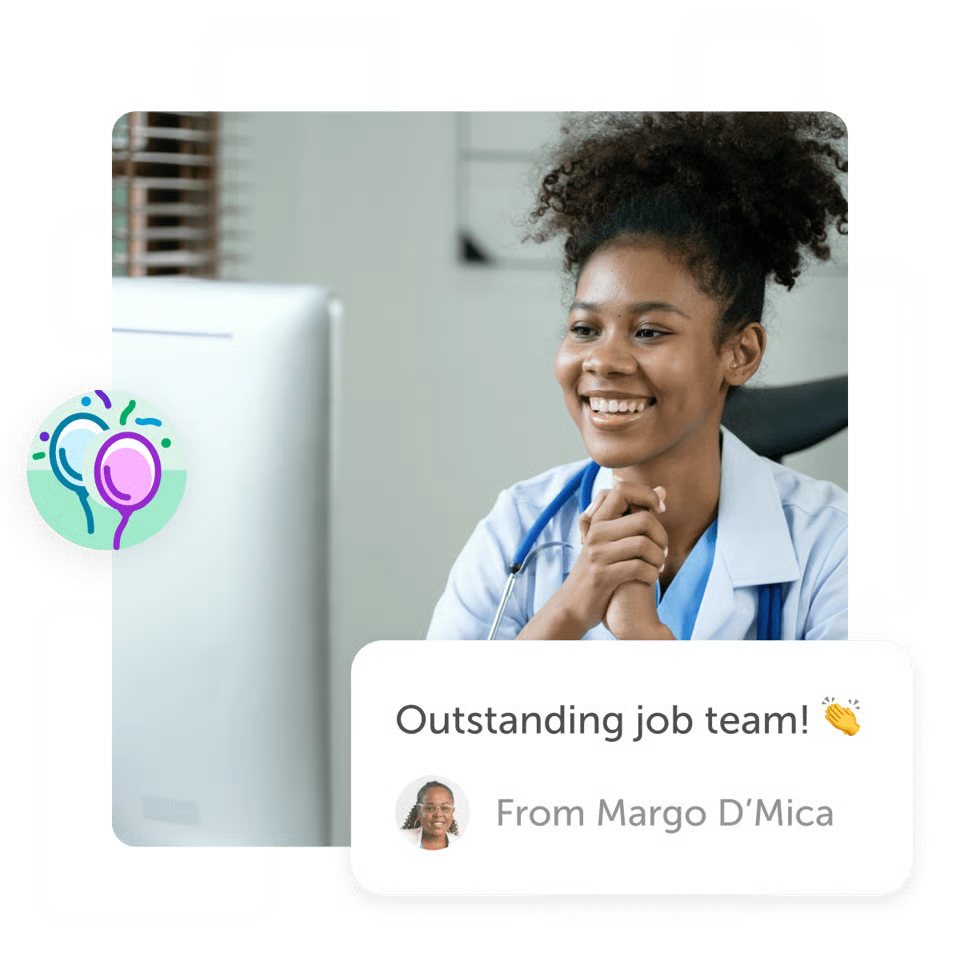
As mentioned, Kudoboard helps healthcare organizations display gratitude in the workplace.
Once you become a Kudoboard user, you’ll be able to send your employees personalized eCards to thank them for their service, create staff recognition boards that all employees can contribute to, and display patient thank you notes in public areas of your hospital or clinic.
But that’s not all. Kudoboard will also allow you to attach digital gift cards to your eCards to make your employees feel extra special. Or transform the eCards and/or virtual boards you create into physical keepsakes, like a beautiful hardbound book or wall poster.
We know what you’re thinking, “Kudoboard sounds great, but is it easy to use?” The answer is yes! To create an eCard or board, simply access our library of professionally designed templates. Then adjust each one to meet your needs via a drag-and-drop editor.
Inside the tool, you’ll also have access to handy features like automation, which allows you to schedule eCards to send on specific dates so you don’t forget, detailed analytics, know how your Kudoboard account is used by employees, and integrations with Slack, Microsoft Teams, and 200+ HRIS platforms, so Kudoboard fits into your pre-existing workflows.
From Crisis to Culture Change
There’s an indisputable connection between staff gratitude, reduced burnout, and a good patient experience. Healthcare systems across the country demonstrate that small acts of appreciation create transformational change when implemented consistently and authentically.
The compound effect begins with individual expressions of gratitude between colleagues and extends naturally to patient interactions. When healthcare workers feel valued by their peers, they bring that positive energy to patient care. When patients receive care from appreciated, engaged staff, they experience healthcare as more than treatment; it becomes true healing.
Kudoboard can help you facilitate gratitude in your hospital, clinic, or long-term healthcare facility. Whether you want to send eCards to your nursing staff, create peer-recognition boards in breakrooms, or display patient thank you notes in lobbies, you can do it with our solution.
Build stronger engagement through meaningful appreciation
Frequently Asked Questions
How does gratitude reduce burnout in healthcare settings?
Gratitude directly addresses burnout by improving emotional resilience and engagement. When healthcare workers receive consistent employee appreciation, stress levels decrease, and motivation improves. Over time, this leads to stronger team cohesion, lower turnover, and a healthier work environment that supports sustained performance.
Why is employee appreciation important for patient care?
Healthcare workers who feel valued are more focused, empathetic, and engaged in their roles. Consistent employee appreciation improves communication and collaboration, which directly supports better clinical interactions and safer care delivery. These factors collectively enhance the overall patient experience.
What role does a letter of appreciation play in healthcare workplaces?
A letter of appreciation provides tangible, lasting recognition that reinforces positive behaviors. Unlike verbal praise, written appreciation can be revisited and shared, strengthening morale and trust. In healthcare environments, this form of recognition helps employees feel acknowledged despite demanding schedules and high-pressure conditions.
How does workplace appreciation improve patient experience?
Workplace appreciation creates a culture where staff feel supported rather than overwhelmed. When teams operate in positive, respectful environments, patients experience care as more attentive, coordinated, and compassionate. This cultural shift plays a key role in improving patient experience across departments.
Can gratitude initiatives be implemented without disrupting workflows?
Yes. Successful programs integrate appreciation into existing routines such as shift handovers, digital recognition boards, or brief eCards. When implemented gradually, gratitude initiatives support employee appreciation without adding administrative burden, while still contributing to better staff morale and patient outcomes.
About the author: