A connected team does not just happen. It is built through consistent effort, shared experiences, and intentional interaction. In many workplaces, people work side by side but still feel disconnected. Meetings become routine, communication becomes transactional, and collaboration starts to feel forced. This is where team engagement games come in.
One of the simplest ways to make this happen is through team engagement games. When done right, these games do more than fill time. They break down communication barriers, build trust, and create shared experiences that carry into daily work.
The best part is that you do not need a huge budget or elaborate setup. With the right ideas, you can turn even a short team session into something meaningful and energizing.
In this guide, you will find 53 practical and creative ways to bring your team closer together. These ideas are designed to be easy to run, adaptable to different team sizes, and effective in both physical and remote work environments.
Key Takeaways
- Team engagement grows through consistent interaction and shared experiences that strengthen workplace connections.
- Simple team games can improve communication, trust, collaboration, and overall team morale.
- The right activities, chosen based on team size and goals, help create a more connected and productive team.
- You do not need a large budget; simple and practical activities can still be very effective.
- Regular engagement activities help teams stay motivated, collaborative, and connected over time.
Why Team Engagement Games Matter
Before jumping into the list, it helps to understand why these activities are worth your time.
Well-designed team engagement games can:
Improve communication across departments
Team engagement games create a relaxed space where employees from different departments can connect more naturally. Instead of working in isolation, people begin to understand each other’s communication styles and perspectives, making collaboration smoother and reducing everyday misunderstandings.
Build trust among team members
Trust doesn’t come from meetings alone; it grows when people share experiences. These games create a comfortable environment where team members can rely on each other and work toward a common goal, helping them feel more confident, open, and supportive over time.
Reduce workplace stress
Work can get intense, and constant pressure can take a toll. Team engagement games offer a chance to step away, reset, and have a bit of fun, helping people feel lighter, less tense, and more focused when they return to their tasks.
Encourage creativity and problem-solving
These games push employees to think outside the box and explore new ideas together. By collaborating and seeing problems from different angles, teams develop a more creative mindset that naturally carries into their everyday work.
Increase overall productivity
When communication flows better and stress levels drop, people naturally work more effectively. Employees feel more motivated and connected, which leads to stronger teamwork and more consistent results.
According to research from Gallup, highly engaged teams show significantly better performance and lower turnover rates. If your team feels disconnected, even simple activities can make a noticeable difference.
53 Creative Team Engagement Games
Now that you understand the value of why team engagement matters, here are 53 simple and fun ideas to bring your team closer together:
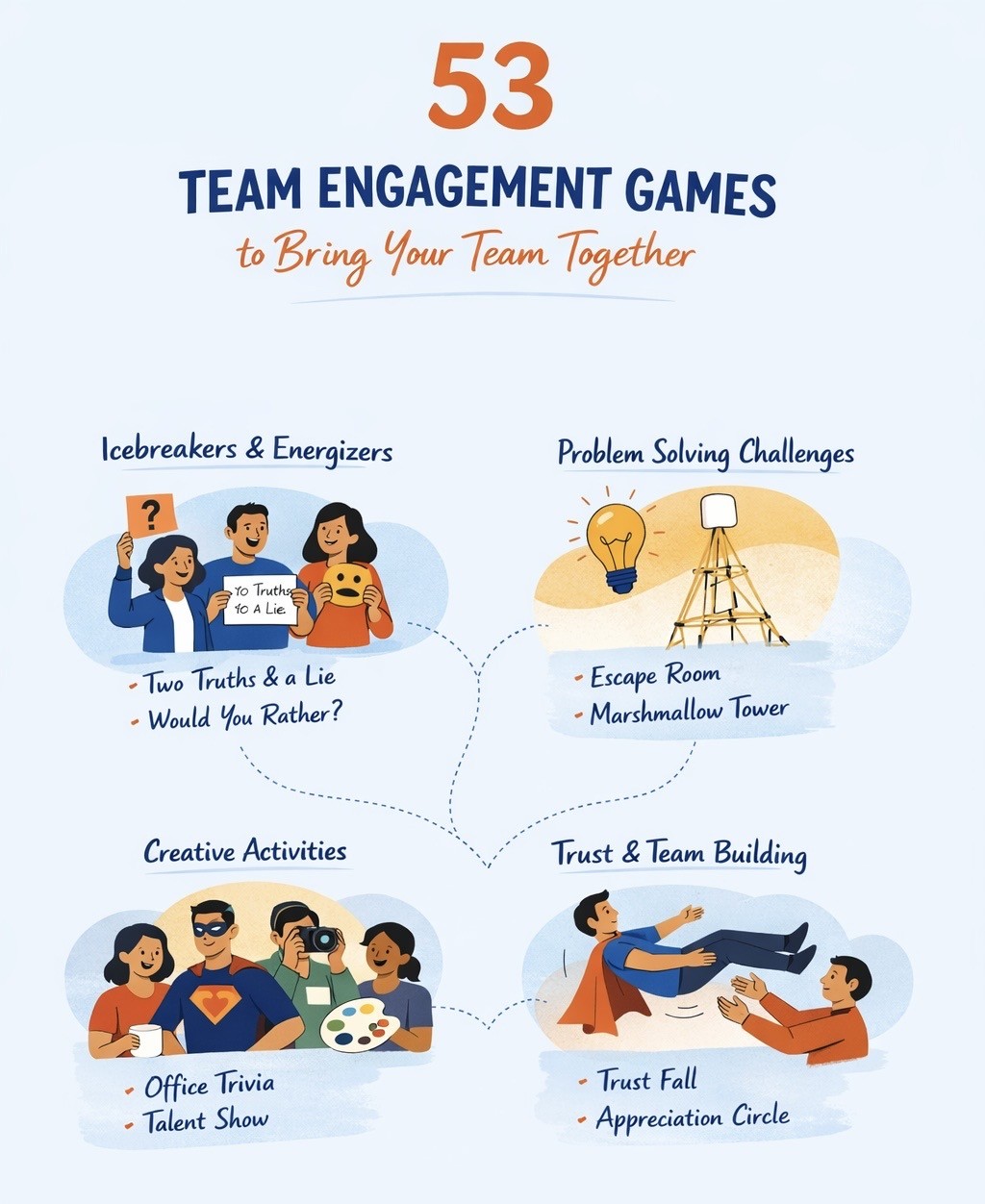
Icebreaker and Quick Energy Boosters
These activities help break the awkwardness, lift the mood, and make people more comfortable participating. They are especially useful for starting meetings, welcoming new team members, or quickly re-energizing a group when focus begins to drop.
1. Two Truths and a Lie: Each person shares two true statements and one false one. The rest of the team guesses which is the lie, making it a fun way to learn surprising facts about each other.
2. One Word Check-In: Ask everyone to describe how they’re feeling in just one word. It’s a quick way to gauge the team’s mood and encourage openness.
3. Desert Island Picks: Team members share three items they would take to a deserted island. This sparks creativity and reveals personality and priorities.
4. Would You Rather: Ask fun or thought-provoking “would you rather” questions. It encourages participation and often leads to laughter and interesting discussions.
5. Emoji Introductions: Have everyone describe their current mood using only emojis. It’s a light, visual way to express feelings without overthinking.
6. Speed Networking: Pair team members randomly for short, timed conversations. This helps people connect quickly, especially in larger teams.
7. Guess the Fun Fact: Collect interesting facts about team members beforehand and have others guess who each fact belongs to. It’s engaging and helps people learn more about each other.
8. Show and Tell: Invite team members to share something meaningful, like a hobby, item, or story. This builds connection and encourages personal expression.
9. Rapid Fire Questions: Ask quick, back-to-back questions that require immediate answers. It keeps energy high and often leads to funny, spontaneous responses.
10. Common Ground Challenge: Divide into small groups and challenge them to find at least five things everyone has in common. It promotes teamwork and highlights shared interests.
Problem-Solving and Collaboration Games
These team engagement games encourage employees to think creatively and work together to find solutions. They help strengthen communication, build trust, and improve how teams approach challenges as a group.
11. Escape Room Challenge: Teams solve a series of puzzles and uncover hidden clues in a themed room, physical or virtual, to escape before time runs out. Encourages problem-solving, teamwork, and creative thinking.
12. Marshmallow Tower: Teams use limited materials like spaghetti, tape, and string to build the tallest freestanding tower with a marshmallow on top. Promotes creativity, planning, and collaboration.
13. Puzzle Race: Teams compete to complete a jigsaw or logic puzzle first. Helps improve communication, strategy, and time management.
14. Blindfold Navigation: One team member is blindfolded while others guide them verbally through obstacles. Builds trust, listening skills, and clear communication.
15. Egg Drop Challenge: Teams design a protective structure to prevent an egg from breaking when dropped from a height. Encourages innovation, teamwork, and practical problem-solving.
16. Build a Bridge: Teams construct a bridge using simple materials that can hold a set weight. Teaches collaboration, planning, and basic engineering skills.
17. Code Breaker: Teams solve riddles, puzzles, or coded messages to unlock clues or complete tasks. Strengthens analytical thinking, logic, and teamwork.
18. Lego Challenge: Teams recreate a structure based on instructions using Lego blocks. Improves attention to detail, spatial reasoning, and cooperative building skills.
19. Survival Scenario: Teams rank items needed to survive a hypothetical situation. Develops critical thinking, discussion, and decision-making skills.
20. Reverse Brainstorming: Teams list ways to cause a problem, then reverse the ideas to find solutions. Encourages creativity, problem-solving, and out-of-the-box thinking.
Communication-Focused Games
Strong communication is the backbone of any successful team. These games help team members practice listening, expressing ideas clearly, and understanding different perspectives.
21. Telephone Game: Team members sit in a line and pass a message from one person to the next. At the end, the final message is compared to the original. Highlights communication accuracy and the importance of clear instructions.
22. Drawing Challenge: One person describes an image while another draws it based only on the description. Encourages active listening, clarity in communication, and interpretation skills.
23. Story Building: Each team member adds a sentence to continue a story, building on what the previous person said. Develops creativity, collaboration, and storytelling skills.
24. Role Swap: Team members temporarily switch roles to perform a short task. Promotes empathy, understanding of others’ responsibilities, and adaptability.
25. Listening Pairs: In pairs, one person speaks on a topic while the other summarizes what was said. Strengthens active listening, comprehension, and feedback skills.
26. Debate Sessions: Teams engage in friendly debates on light or fun topics. Encourages critical thinking, respectful argumentation, and public speaking confidence.
27. Silent Line-Up: Team members must arrange themselves in a specific order (e.g., by birthday or height) without speaking. Builds non-verbal communication and cooperation.
28. Question Chain: Each team member answers a question in a way that naturally leads to the next question. Enhances creativity, quick thinking, and group engagement.
Creative and Fun Activities
These activities encourage imagination while giving teams a chance to relax and enjoy working together. They help reduce stress and create a more positive, open team environment.
29. Office Trivia: Teams answer questions related to your workplace, company history, or colleagues. Encourages learning, engagement, and friendly competition.
30. Talent Show: Employees showcase hidden talents, from singing to magic tricks. Builds confidence, appreciation for colleagues, and team spirit.
31. Meme Contest: Teams create work-related memes to share with the group. Sparks creativity, humor, and light-hearted bonding.
32. Photo Challenge: Assign a theme and have teams submit photos that fit. Encourages creativity, observation, and teamwork.
33. DIY Craft Session: Teams create simple crafts together, such as decorations or small projects. Fosters collaboration, creativity, and hands-on engagement.
34. Cooking Challenge: Participants share recipes or cook live virtually, following a fun theme. Promotes creativity, teamwork, and interactive learning.
35. Lip Sync Battle: Teams or individuals perform lip syncs to chosen songs. Encourages confidence, performance skills, and fun group energy.
36. Theme Dress Day: Pick a theme (e.g., retro, superheroes) and let everyone participate. Builds camaraderie and a sense of shared fun.
Team Bonding and Trust-Building Games
These team engagement games help strengthen relationships and build trust among team members. They encourage openness, support, and stronger connections within the team.
37. Trust Fall: Team members take turns falling backward while a colleague catches them. This classic exercise develops trust, confidence in teammates, and team support.
38. Appreciation Circle: Each participant takes a turn expressing appreciation for another team member. Builds positivity, recognition, and strengthens relationships.
39. Personal Story Sharing: Team members share meaningful personal experiences with the group. Encourages empathy, understanding, and deeper connections among colleagues.
40. Gratitude Wall: Participants write notes of appreciation or gratitude and display them for the team to see. Promotes a positive work environment and fosters recognition.
41. Mentorship Match: Pair employees for short-term knowledge sharing or guidance. Enhances learning, collaboration, and mutual support.
42. Values Discussion: Team members discuss what matters most to them in work and life. Encourages reflection, alignment, and shared understanding of team priorities.
43. Strength Spotting: Colleagues identify and acknowledge each other’s strengths. Builds confidence, mutual respect, and highlights team capabilities.
Remote-Friendly Team Engagement Games
For distributed teams, these games help maintain connection despite physical distance. They encourage participation, keep communication active, and make virtual meetings more engaging.
37. Trust Fall: Team members take turns falling backward while a colleague catches them. This classic exercise develops trust, confidence in teammates, and team support.
38. Appreciation Circle: Each participant takes a turn expressing appreciation for another team member. Builds positivity, recognition, and strengthens relationships.
39. Personal Story Sharing: Team members share meaningful personal experiences with the group. Encourages empathy, understanding, and deeper connections among colleagues.
40. Gratitude Wall: Participants write notes of appreciation or gratitude and display them for the team to see. Promotes a positive work environment and fosters recognition.
41. Mentorship Match: Pair employees for short-term knowledge sharing or guidance. Enhances learning, collaboration, and mutual support.
42. Values Discussion: Team members discuss what matters most to them in work and life. Encourages reflection, alignment, and shared understanding of team priorities.
43. Strength Spotting: Colleagues identify and acknowledge each other’s strengths. Builds confidence, mutual respect, and highlights team capabilities.
Outdoor and Active Games
If your team meets physically, these activities help boost energy and encourage natural interaction. They create opportunities for movement, teamwork, and stronger connections outside the usual work setting.
51. Sports Day: Organize friendly competitions such as races, relays, or team games. Encourages physical activity, teamwork, and healthy competition.
52. Treasure Hunt: Teams follow a series of clues placed around the office or designated area to find a hidden “treasure.” Promotes problem-solving, collaboration, and observation skills.
53. Group Walk or Hike: Take a walk or hike together, either around the workplace or nearby outdoor area. Encourages casual conversation, team bonding, and well-being.
How to Choose the Right Team Engagement Games
Not every activity will suit every team. The key is to choose intentionally.
Consider Your Team Size
Choosing the right activity depends on how many people are involved.
Small teams benefit from deeper discussions.
In smaller teams, it is easier to create space for meaningful conversations. Activities can be more personal, allowing everyone to share ideas, experiences, and feedback. This helps build stronger connections and a deeper level of trust among team members.
Larger teams need structured activities.
For bigger teams, structure is important to keep things organized and engaging. Clear instructions, defined roles, and group divisions help ensure everyone participates. This prevents confusion and makes the activity more effective and enjoyable for everyone involved.
Understand Preferences
Ask your team what they enjoy. Some prefer quiet activities, others enjoy high-energy games. Match the Goal
Different goals require different approaches:
Icebreakers for new teams.
When a team is just forming, the focus should be on helping people feel comfortable around each other. Icebreakers create a relaxed environment where individuals can introduce themselves, share a bit about their personalities, and ease into group interactions. This helps remove initial awkwardness and sets the foundation for open communication.
Trust-building for growing teams.
As teams develop, the goal shifts to strengthening relationships and building reliability among members. Trust-building activities encourage openness, honesty, and collaboration. They help team members feel safe relying on each other, which is essential for handling challenges and working effectively together.
Creative games for innovation.
When the goal is to spark new ideas, creative games are the best approach. These activities push employees to think outside the box, explore different perspectives, and experiment with solutions. This kind of environment encourages innovation and helps teams approach problems with fresh, flexible thinking. Keep It Inclusive.
Make sure activities are accessible to everyone.
Tips to Make These Games Actually Work
A common mistake is running activities without a clear purpose. To avoid that:
Set Expectations
Start by explaining why the activity matters. When people understand the purpose, they are more likely to take it seriously and participate fully. It also helps them see how the activity connects to their work and team goals.
Keep It Simple
Simple activities are easier to understand and more enjoyable to join. Complicated rules can confuse participants and reduce engagement. The easier it is to follow, the more likely everyone will take part.
Encourage Participation, Not Pressure
Create an environment where people feel comfortable joining in without being forced. Some employees may need more time to open up, and that is okay. Encouraging participation gently leads to more genuine involvement.
Debrief After
Take a few minutes to reflect on the activity. Ask what people enjoyed or what they learned. This helps reinforce the value of the exercise and makes it more meaningful.
Stay Consistent
One activity will not create lasting engagement. Make these sessions a regular part of your team culture. Consistency helps build stronger connections over time.
You can learn more about creating a strong workplace culture through resources like Harvard Business Review.
Build a Connected Team
Engagement is not a one-time initiative. It is an ongoing process that requires effort and intention. By using a mix of thoughtful, creative, and well-executed team engagement games, you create an environment where people feel comfortable contributing, sharing ideas, and doing their best work.
Start simple. Stay consistent. And most importantly, make it meaningful. When it comes to improving team engagement, you can’t go wrong with Kudoboard. Our platform was designed to help you recognize your staff for their efforts. Doing so will make them feel valued, which will encourage them to work harder and supercharge their performance.
Access the tools you need to recognize and engage your team in their work
Frequently Asked Questions
1. What is a fun game to play with a large group?
A fun game for a large group is a scavenger hunt. It encourages teamwork, movement, and problem-solving while keeping many participants involved. Other simple options include trivia, charades, and bingo.
2. What are the 4 types of fun in games?
The four types of fun in games are easy fun, hard fun, serious fun, and social fun. Easy fun focuses on curiosity, hard fun comes from overcoming challenges, serious fun gives a sense of purpose, and social fun involves interacting with others.
3. What games can you play with coworkers on Microsoft Teams?
You can play games like trivia quizzes, virtual bingo, Pictionary, and icebreaker questions on Microsoft Teams. These games are easy to run during video calls and help keep remote teams engaged.
4. What are the five keys to engagement?
The five keys to engagement are clear communication, recognition, growth opportunities, trust, and purpose. These factors help employees stay motivated, connected, and productive at work.
5. Why are team engagement games important?
Team engagement games help improve communication, build trust, and strengthen relationships among team members. They also boost morale and encourage collaboration in the workplace.
About the author: