
Workplace wellness is about creating an environment where people feel supported, appreciated, and connected. When employees feel good, they don’t just work better; they collaborate better, stay longer, and contribute more meaningfully.
The most effective wellness programs go beyond checklists and perks. They bring together mental health support, flexibility, and everyday recognition to create a culture people actually want to be part of. And employee recognition is at the heart of it all, because when people feel seen, everything else follows.
And the best part? You don’t need a massive budget or a complex strategy to get started. Small, consistent actions, whether it’s offering support, encouraging balance, or simply recognizing a job well done, can make a lasting impact.
Because at the end of the day, wellness isn’t a program. It’s how people experience work every single day.
What Are Employee Wellness Programs?
Employee wellness programs are initiatives designed to support the full spectrum of employee well-being, mental, emotional, social, financial, and physical. And the best ones? They go beyond checklists and create real moments of connection.
Today’s wellness programs often include:
- Mental health resources and counseling
- Flexible work policies
- Financial planning support
- Team connection and culture-building activities
- Recognition and appreciation initiatives
Because here’s the thing: Wellness isn’t just about reducing stress; it’s about increasing belonging.
Key Benefits of Wellness Programs Beyond Physical Health
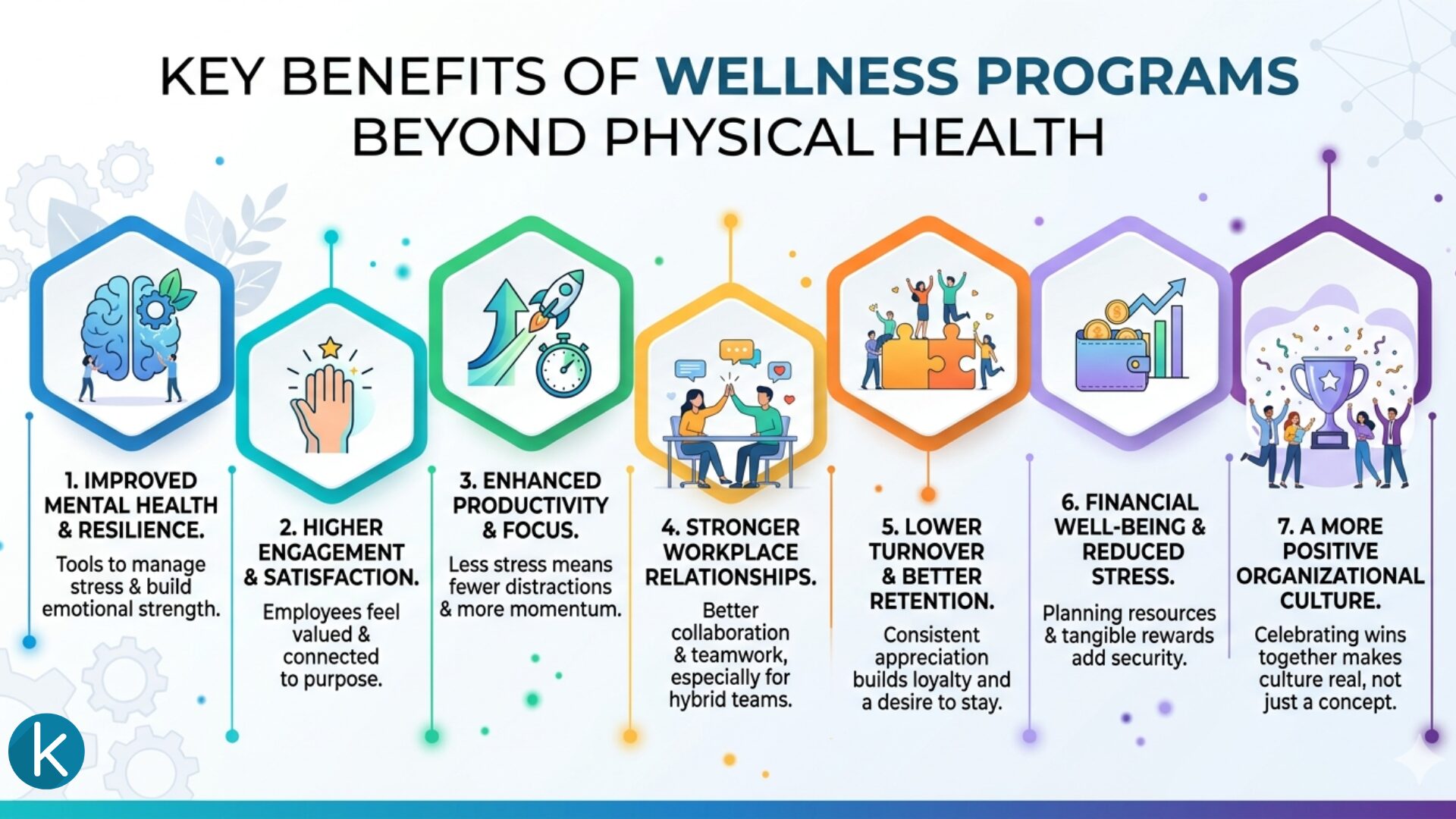
Wellness programs do far more than support physical health; they shape how employees feel, perform, and connect at work. When thoughtfully designed, these initiatives help reduce stress, strengthen mental well-being, and create a more positive, engaged workforce.
The ripple effect is hard to miss: higher productivity, stronger retention, and a healthier workplace culture where people genuinely feel supported.
1. Improved Mental Health and Emotional Resilience
Workplace stress and burnout are ongoing challenges that organizations can’t afford to overlook. And you are still ignoring it? Wellness programs that prioritize mental health give employees tools to manage stress and build resilience.
But here’s what often gets overlooked:
Feeling appreciated plays a huge role in emotional well-being. When employees are recognized for their efforts, whether through a simple shout-out or a collaborative appreciation board, it reinforces that their work matters.
Platforms that enable peer-to-peer recognition and shared appreciation moments can help make that support visible and consistent across teams. Because sometimes, a genuine “thank you” does more for mental health than another webinar ever could.
2. Higher Employee Engagement and Job Satisfaction
People don’t disengage because they’re lazy. They disengage because they feel invisible.
Wellness programs that include recognition create a sense of purpose and connection. When appreciation becomes part of everyday work culture:
- Employees feel valued,
- Contributions are acknowledged, and
- Motivation increases naturally
In fact, recognition-driven experiences, whether it’s celebrating milestones or sharing team wins, can significantly boost morale and job satisfaction. And when people feel appreciated, they don’t just show up, they show up energized.
3. Enhanced Productivity and Focus
Let’s talk productivity, but without the corporate buzzwords. People do their best work when they feel good, mentally, emotionally, and socially. Wellness programs help by:
- Reducing stress-related distractions.
- Encouraging balance.
- Reinforcing positive behaviors.
And recognition plays a key role here. When employees know their work is noticed, they’re more likely to repeat those high-impact behaviors.
A quick reality check: a motivated employee doesn’t need micromanagement; they need momentum.
4. Stronger Workplace Relationships
Work is better when people actually enjoy working together. Wellness programs that encourage connection help build stronger, more collaborative teams. This is especially important in remote teams and hybrid teams.
Recognition tools, like shared digital boards or team shout-outs, create opportunities for employees to celebrate each other, even across time zones.
The result:
- Better communication
- Stronger team bonds
- A genuine sense of belonging
Because culture isn’t built in meetings, it’s built in moments.
5. Lower Employee Turnover and Better Retention
Hiring is hard. Retaining great people? Even harder. Wellness programs help employees stay, not just because they’re healthy, but because they feel valued.
Recognition plays a major role here:
- Employees who feel appreciated are less likely to leave.
- Consistent acknowledgment builds loyalty.
- Culture becomes a reason to stay, not leave.
Remember this: People don’t leave companies; they leave environments where they feel unnoticed.
6. Financial Well-Being and Reduced Stress
Money stress doesn’t magically disappear during work hours. Financial wellness programs help employees feel more secure, and that peace of mind shows up in their work.
But here’s an interesting layer: recognition programs that include rewards, gift cards, or thoughtful incentives can also contribute to financial well-being in small but meaningful ways.
Some platforms even allow teams to attach gifts or contributions to appreciation moments, adding a tangible layer to emotional recognition. It’s not about the reward, it’s about reinforcing that effort is valued.
7. A More Positive Organizational Culture
You can’t fake culture. Employees can tell. Wellness programs shape culture through consistent, everyday actions, not one-time initiatives.
Recognition helps bring that culture to life:
- Celebrating wins (big and small)
- Highlighting company values in action
- Encouraging peer-to-peer appreciation
Some organizations use collaborative tools where employees can contribute messages, photos, and even videos to celebrate milestones together, turning recognition into a shared experience.
That’s when culture stops being a slide deck and starts being real.
How Wellness Programs Support Business Outcomes
Let’s connect the dots. Wellness programs don’t just improve employee experience; they drive business results.
Here’s how:
- Higher productivity: Supported employees perform better.
- Better engagement: Recognition boosts morale and participation.
- Lower absenteeism: Healthier employees show up consistently.
- Stronger retention: People stay where they feel valued.
In fact, organizations using recognition-driven approaches report noticeable improvements in engagement, morale, and productivity. When employees feel supported and valued, business performance naturally follows. It really is that simple.
Best Practices for Building a Modern Wellness Program
Not every wellness program gets it right the first time, and that’s perfectly okay. The important part is recognizing what can be improved and making thoughtful adjustments along the way.
1. Make It Human: Focus on real needs, not just trends.
2. Build Recognition Into the Experience: Don’t treat appreciation as an afterthought. Make it part of regular work.
3. Keep It Simple and Accessible: If it’s hard to use, people won’t use it.
4. Encourage Peer Participation: Recognition shouldn’t only come from leadership.
5. Celebrate Often (Not Just Annually): Birthdays, milestones, small wins, it all counts.
Pro tip: The most effective programs aren’t the biggest, they’re the most consistent.
Common Challenges And How to Overcome Them
Even well-designed wellness programs can face roadblocks. The key is to identify what’s not working and adjust quickly. Here are the most common challenges and simple ways to fix them.
Low Participation Rates
Many programs struggle because employees don’t engage consistently. Often, the offerings feel irrelevant or hard to access. Make programs flexible, easy to join, and aligned with employee needs.
Lack of Awareness
Sometimes employees aren’t ignoring wellness programs; they just don’t know about them. Communicate regularly using clear, benefit-focused messaging across multiple channels.
Limited Budget
Not every organization can invest heavily in wellness initiatives, but impact doesn’t always require big spending. Start with low-cost, high-impact ideas like flexible schedules and recognition-driven initiatives.
Lack of Leadership Buy-In
When leaders aren’t involved, programs can feel optional or unimportant. Encourage leadership to actively participate and model wellness behaviors.
One-Size-Fits-All Approach
A single solution rarely works for a diverse workforce with different needs and preferences. Offer a mix of mental, social, financial, and physical wellness options.
Difficulty Measuring Impact
It can be challenging to prove the effectiveness of wellness programs without clear data. Track simple metrics like participation, employee engagement, and retention trends over time.
The most effective wellness programs evolve continuously, adapting to employee feedback and changing workplace needs.
Final Thoughts
A great wellness program isn’t about doing more; it’s about doing what matters. When employees feel supported, recognized, and connected, they show up with more energy, focus, and commitment. That’s what drives real results.
The most effective approaches don’t rely on big, one-time initiatives. They’re built on simple, consistent actions, making space for well-being, encouraging balance, and recognizing people in meaningful ways.
Because in the end, wellness is the experience you create for your team every day.
Start Building a Happier, More Engaged Team
No setup hassle. Start recognizing your team in minutes.
FAQs About Employee Wellness Programs
- How do wellness programs benefit employees?
Wellness programs support employees beyond physical health by improving mental well-being, reducing stress, and increasing overall job satisfaction. They also boost productivity, strengthen workplace relationships, and help employees feel more valued and engaged at work.
- What are the 5 C’s of wellness?
The 5 C’s of wellness focus on building a well-rounded and fulfilling employee experience:
- Career: Growth, purpose, and job satisfaction
- Community: Connection and sense of belonging
- Connection: Strong relationships at work
- Contribution: Feeling valued and recognized
- Care: Physical and mental health support
Together, these elements help create a more balanced and engaged workforce.
- What are the 7 pillars of wellness?
The 7 pillars of wellness represent the key areas that contribute to overall well-being: Physical, Mental, Emotional, Social, Financial, Spiritual, and Occupational/Vocational health.
Effective wellness programs address multiple pillars to support employees holistically, not just physically.
- Why are wellness programs important for companies?
Wellness programs improve employee performance, reduce absenteeism, and enhance retention by creating a supportive and positive work environment.
About the author: